Last updated November 22, 2026
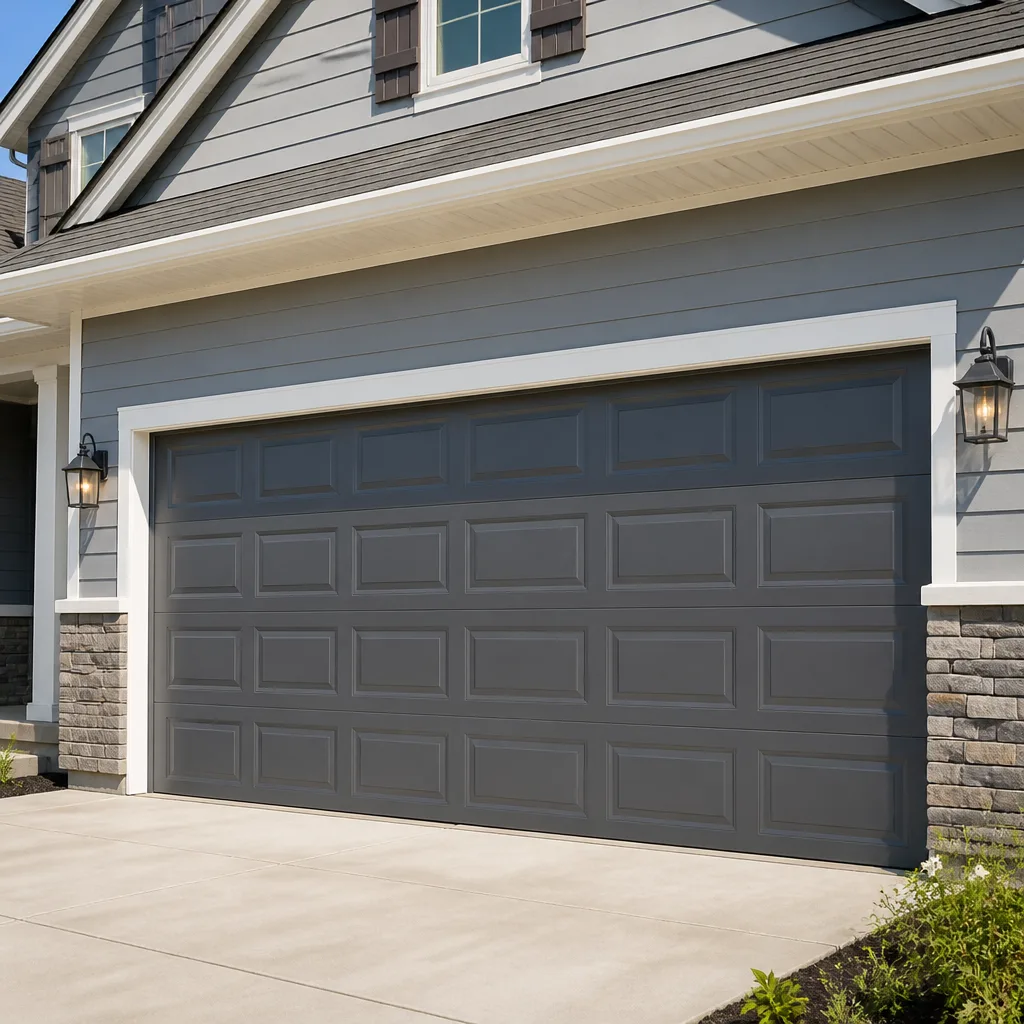 Raised-panel steel
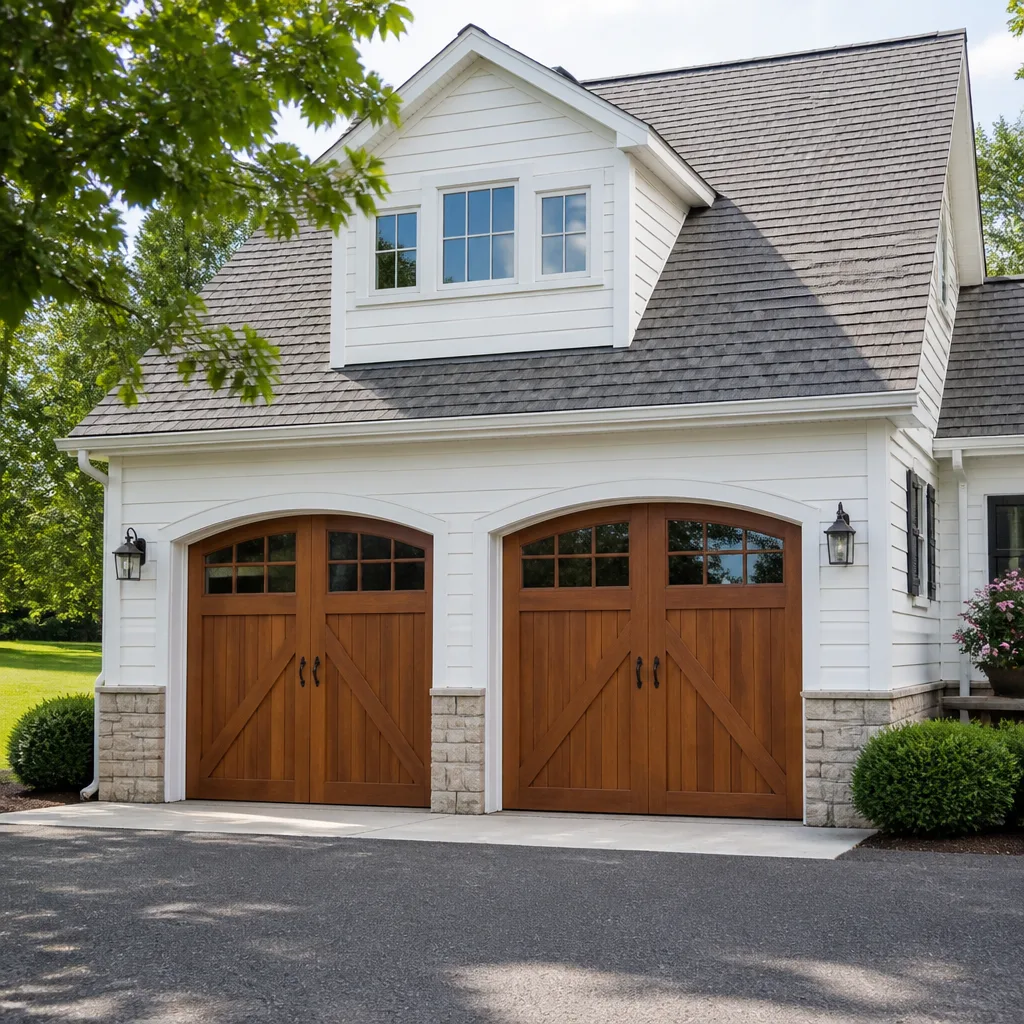 Carriage house
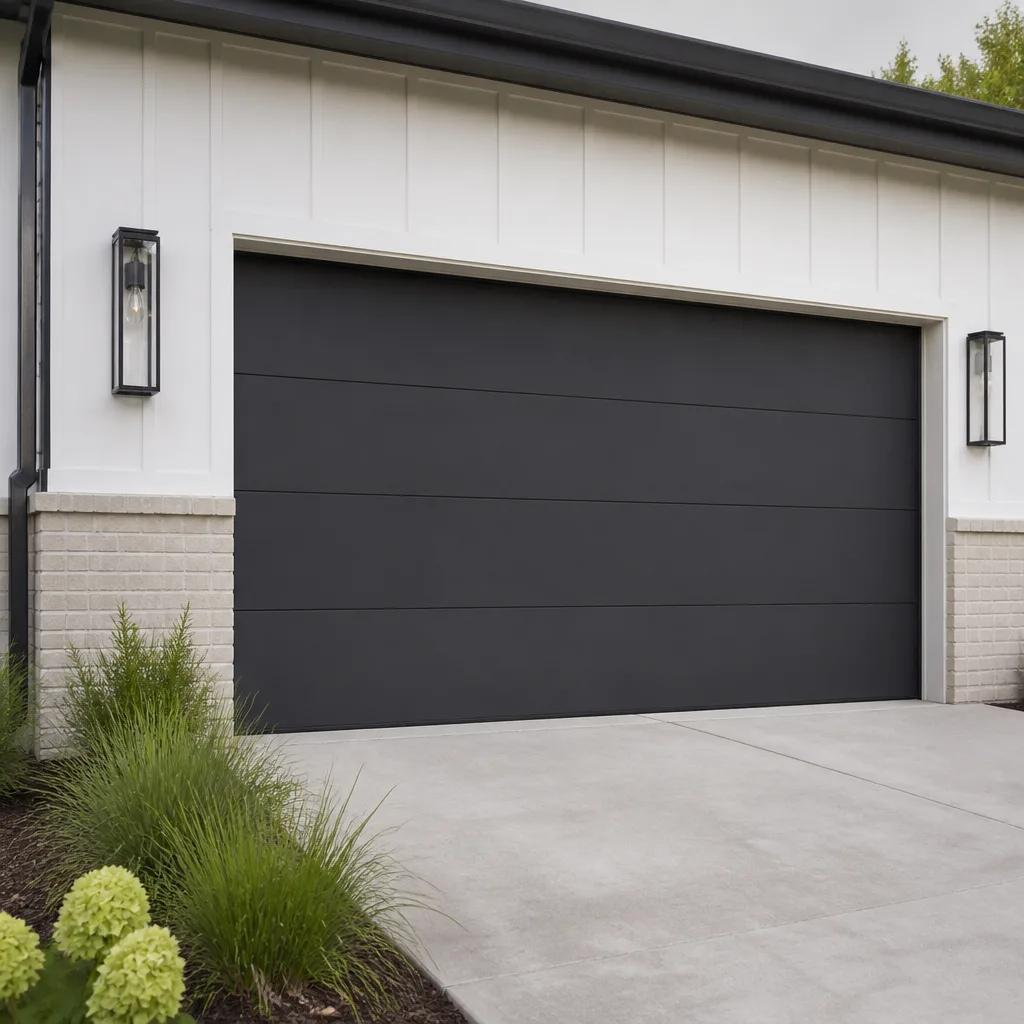 Modern flush
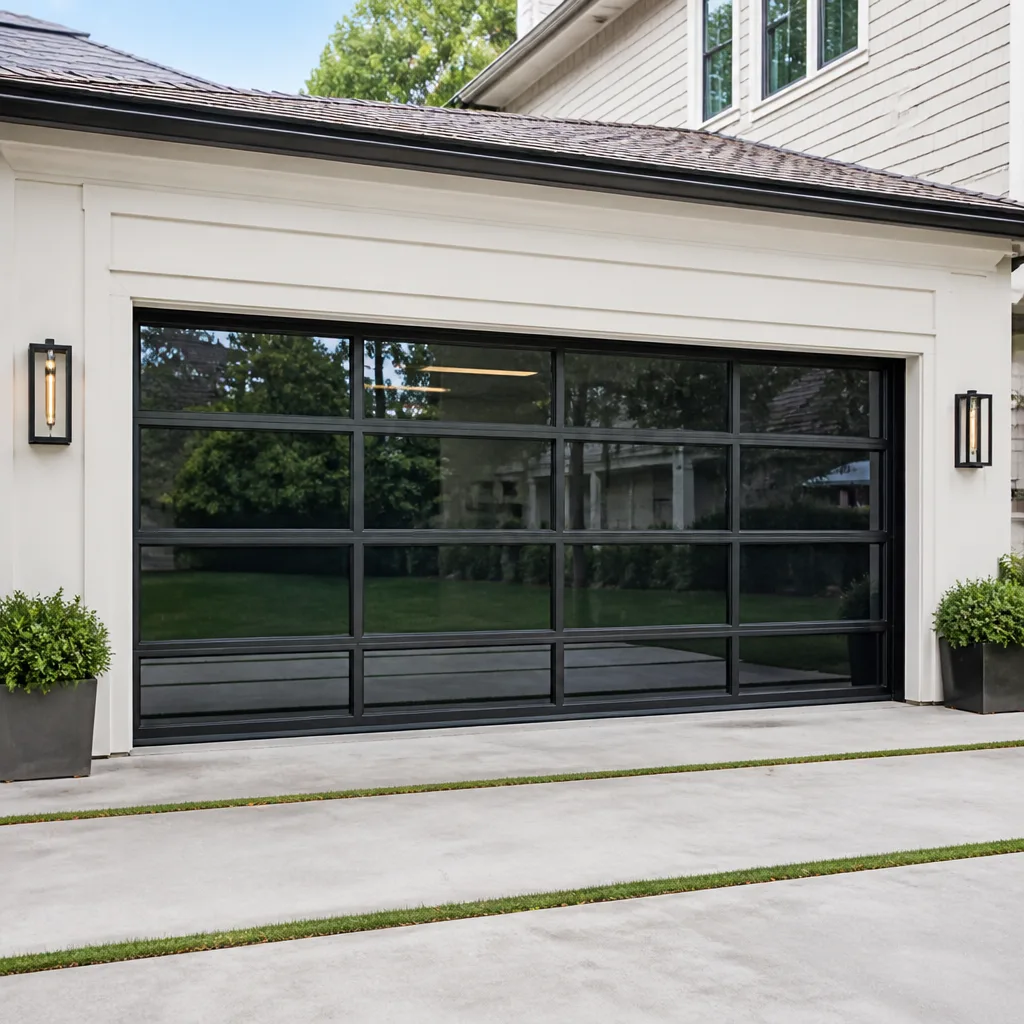 Full-view glass
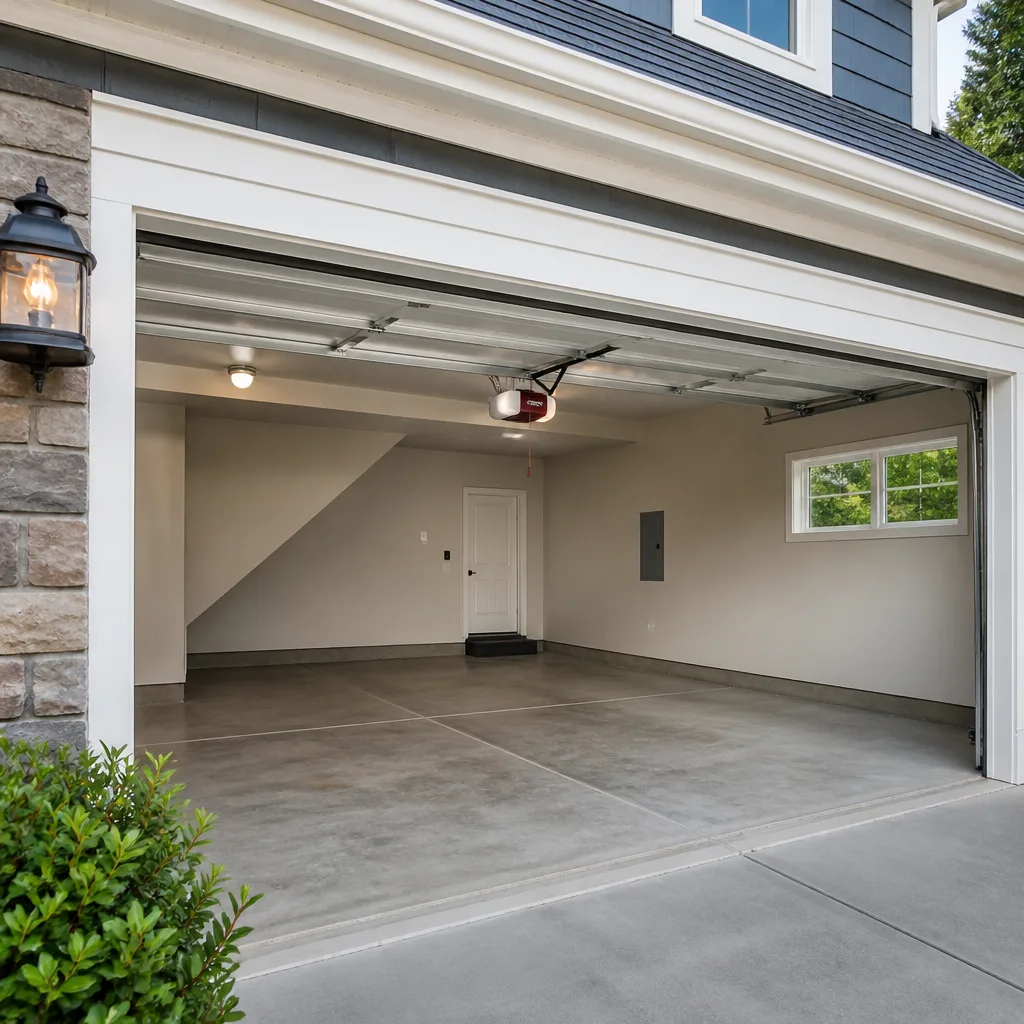 LiftMaster openers
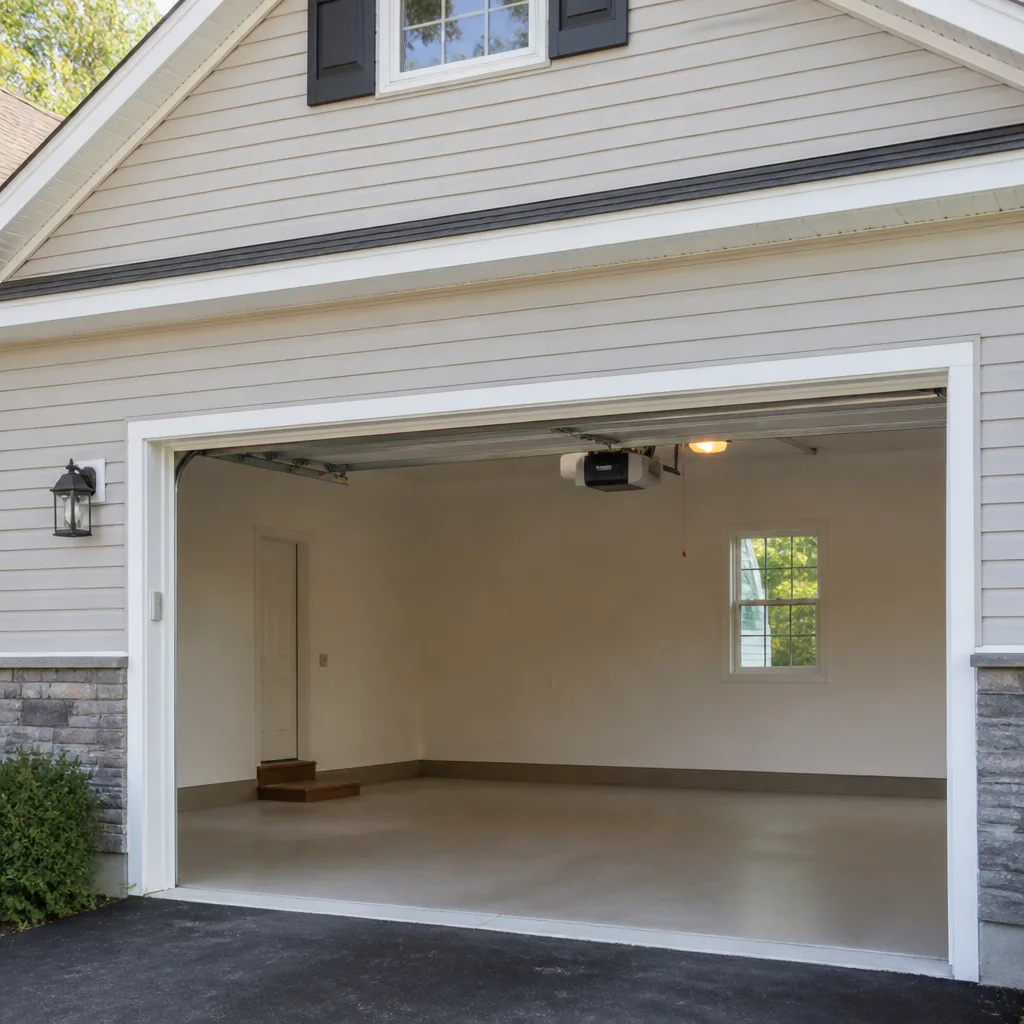 Chamberlain openers
Full 25-point door and opener safety check with every visit - springs, cables, rollers, tracks, and your LiftMaster or Chamberlain opener included
You get a price before we start. It does not change when the pro arrives.
Get your free estimateThe Complete Guide to Garage Doors in Framingham
Your garage door is the largest moving mechanical object in your home and, for most Framingham houses, the primary daily entrance, yet most homeowners know less about it than their dishwasher. That gap matters, because the choices you make before a door fails determine how expensive and disruptive that failure becomes. A door is not a single purchase; it’s a system of panels, springs, cables, tracks, and an opener, and each part has its own lifespan and its own reaction to New England weather. This guide walks through every decision a Framingham homeowner actually faces, in the order you face it, from figuring out what you have to choosing a material, sizing an opener, and knowing when to stop adjusting and start calling. We work on garage doors all day, and we’ve written this the way we’d explain it across a kitchen table.
Quick Answer
A garage door in Framingham is a long-term system decision, not just a cosmetic one: choose the door material and insulation first based on how you use the space and how your home handles freeze-thaw cycles and humid summers, then choose the opener to match the door’s weight and your smart-home needs. Most door failures come from springs and openers wearing out before panels do, so budgeting for those wearable parts separately from the door itself keeps surprises small. If you need help at any step, our team is a phone call away.
Styles & brands we work with
- Raised-panel steel
- Carriage house
- Modern flush
- Full-view glass
- LiftMaster openers
- Chamberlain openers
Table of Contents
- Start by Knowing What You Have
- How Framingham’s Climate Shapes Material Choice
- Why Older Framingham Garages Are Different
- Real Lifespan Expectations Under New England Use
- The Right Order: Door First, Opener Second
- Local Rules That Shape Your Options
- Repair or Replace? How to Decide
- Safety: What Never to Attempt Yourself
Start by Knowing What You Have
Before you shop for anything, identify what’s already on your Framingham home. The make and model of your door and opener determine which parts are available, how much a repair will cost, and whether an upgrade makes sense. This sounds obvious, but plenty of homeowners call us ready to replace a door that only needs a spring, or ready to replace an opener that’s actually fine.
Here’s how to take inventory in about ten minutes:
- Find the door label. Most manufacturers put a sticker or stamped tag on the inside of a panel, often near the bottom or the hinge side. It usually names the brand and model. Clopay, Amarr, Wayne Dalton, and Raynor are common on Framingham homes.
- Find the opener label. Look on the back or underside of the motor housing. LiftMaster, Chamberlain, Genie, and Craftsman are the four we see most often. Note the model number and the year if it’s printed.
- Note the door type. Is it a sectional door (panels that roll up) or a one-piece tilt-up? Sectional is standard on most Framingham homes built after the 1960s.
- Count the springs. A torsion system has springs on a horizontal shaft above the door; an extension system has springs running along the tracks on each side. Torsion is more common and generally longer-lived.
- Check the tracks and rollers by eye. Look for dents, rust, or rollers that are flat-spotted rather than round. Don’t remove anything; just look.
With those five facts, any reputable technician can tell you in a short phone call what you’re dealing with. If you can’t find a label, that’s fine too. A trained eye reads the hardware, the hinge pattern, and the panel construction and knows what it’s looking at. If your door is stuck, noisy, or won’t close, that’s the moment to look at garage door repair rather than keep forcing it.
How Framingham’s Climate Shapes Material Choice
Framingham sits in a climate with real seasonal swing: cold winters with repeated freeze-thaw cycles, humid summers, and nor’easters that bring wind-driven rain and snow. That combination punishes certain materials and rewards others, and it’s the single biggest factor most homeowners skip when they shop. The door you’d pick in Arizona is not the door you want here.
Here’s how the three main material families hold up in Framingham conditions:
- Steel. The most common choice for good reason. Steel doors handle freeze-thaw cycles well, don’t absorb moisture, and hold paint reliably. The failure mode to watch is rust at the bottom panel, where road salt and snowmelt pool. A steel door with a good bottom seal and periodic touch-up lasts a long time here. Insulated steel is the practical default for an attached garage.
- Wood composite. Composite products give you the look of real wood without the swelling and warping that solid wood suffers in humid summers and wet winters. They’re a good fit for Framingham’s colonial-style homes where a steel door would look out of place. They cost more and need more care than steel, but they hold up far better than natural wood in this climate.
- Fiberglass. Fiberglass resists moisture and won’t rust, which sounds ideal, but it can become brittle in deep cold and is harder to repair cleanly if a panel cracks. It’s a reasonable choice for some applications, less so for a door that takes a lot of daily use in a cold climate.
The other climate factor is insulation. An attached garage in Framingham shares at least one wall with the house, and an uninsulated door turns that garage into a cold box all winter. Insulated panels don’t just keep the garage warmer; they cut noise and make the door stiffer, which reduces wear on the opener. If your garage is where you park every day or where you store anything temperature-sensitive, insulation earns its cost.
Why Older Framingham Garages Are Different
A large share of Framingham’s housing stock dates to the 1950s through the 1980s, and those ranch and colonial builds were framed for the cars, doors, and openers of their era. That matters because a modern door is heavier and a modern opener is more powerful, and the structure behind the opening has to carry both. We’ve seen plenty of older garages where the header above the opening is undersized for a new insulated door, or where the original opening dimensions don’t match today’s standard sizes.
Here’s what that means in practice for an older Framingham home:
- Opening dimensions vary. Older garages weren’t always built to today’s standard widths and heights. A new door often has to be built to your actual opening rather than ordered off a shelf, which affects both lead time and price.
- The header and jambs need a look. A heavier door puts more load on the framing above the opening. A technician should check that the header is sound and that the jambs are plumb before measuring. This isn’t a door problem; it’s a structure problem, and it’s better found before the door arrives.
- Headroom and backroom change the spring system. Torsion springs need headroom above the door; extension springs need clear track length behind it. Older garages sometimes have tight clearances that rule out certain configurations.
- Electrical is often original. An older garage may have a single outlet and no ceiling circuit for an opener. That’s a job for an electrician, and it’s worth knowing before you schedule an install.
Newer construction in Framingham generally follows modern standards, so those homes are more plug-and-play. The point isn’t that older homes are a problem; it’s that the door decision on an older home starts with the opening, not the catalog. If the framing needs attention, a specialist should say so up front rather than install a door that overloads it.
Real Lifespan Expectations Under New England Use
Most homeowners are surprised by which parts wear out first. Panels, the most visible and most expensive-looking component, usually outlast everything else. Springs, cables, rollers, and openers are the wearable parts, and in Framingham’s climate they see harder use than the same parts in a mild climate. Freeze-thaw cycles work hinges and rollers loose, road salt attacks the bottom panel and the hardware, and a door that freezes to its bottom seal on a cold morning puts extra strain on the opener every time it’s forced.
Here’s how the lifespans typically sort out:
- Springs. The first thing to fail on most doors. Torsion springs have a working cycle life, and a household that opens and closes the door several times a day reaches the end of it sooner. Cold weather is when they tend to break. Extension springs generally have a shorter life than torsion springs and need safety cables.
- Cables. Cables fray and stretch over time. They’re inexpensive parts but critical to safety, and they should be replaced in pairs when one shows wear.
- Openers. Openers are electronic and mechanical, and they eventually wear out. A chain-drive unit is loud and durable; a belt-drive unit is quieter and smoother. The motor, the logic board, and the safety sensors each have their own failure points. When repair stops making sense, replacement is the call, and that’s where garage door opener repair becomes a decision about repair versus replace.
- Rollers and hinges. Cheap to replace and often overlooked. Worn rollers make a door noisy and jerky, and they put extra strain on the opener. Replacing them is one of the best-value maintenance moves there is.
- Panels. The longest-lived part. Panels usually get replaced because of impact or rust at the bottom, not wear.
The takeaway: budget for the wearable parts separately from the door. A door that’s structurally sound can outlive two or three sets of springs and at least one opener. Knowing that changes how you think about repair costs.
The Right Order: Door First, Opener Second
This is the mistake we see most often, and it’s an expensive one. Homeowners upgrade their opener first because it’s the part that feels most “tech,” then discover the new opener has to be dialed back to lift a heavy old door, or that the door itself needs replacing and the opener choice was wasted. The sequence should always be door first, opener second, because the opener is sized to the door, not the other way around.
Here’s the order that saves money and rework:
- Assess the door. Is it structurally sound? Are the springs, cables, and rollers in reasonable shape? If the door is near the end of its life, decide that first.
- Choose the door material and insulation. Steel, composite, or fiberglass, insulated or not, based on how you use the garage and how the door fits the house.
- Measure the opening. This is where a professional measure matters. Get the actual dimensions, the headroom, and the backroom, and confirm the framing is sound.
- Then choose the opener. Match the opener’s lifting capacity to the new door’s weight. Decide on belt versus chain drive, and whether you want smart-home features. LiftMaster and Chamberlain both offer Wi-Fi-connected models; Genie and Craftsman are common in older installs and still well supported.
- Install the door, then the opener. The door has to be balanced and operating smoothly before the opener is attached. An opener mounted to an unbalanced door fights it every cycle and wears out faster.
If you’re doing a full replacement, garage door installation covers both steps and gets the sequence right in one visit instead of two. And if you’re not sure whether you need a door or just an opener, that’s a good question to ask before you buy anything.
Local Rules That Shape Your Options
Before you shop, check what your Framingham property allows. Two constraints come up more than any other: HOA rules in Framingham’s developments, and the design review that applies near historic districts. Both can take options off the table, and finding that out after you’ve ordered a door is a costly lesson.
- HOA rules. Many Framingham developments restrict door color, panel style, and window placement to keep the neighborhood consistent. Some require approval before installation. Ask your HOA for its architectural guidelines before you pick a door, not after.
- Historic district adjacency. If your home sits near or within a historic district, exterior changes may need review. The rules vary, and the specifics come from your city, so confirm with Framingham’s building department what applies to your address. We won’t guess at what your district requires; that’s a question for the city.
- Permits. Most cities require a permit for structural work related to a garage door opening, and sometimes for opener electrical work. Ask Framingham’s building department whether your project needs one. A reputable installer will know the local process and can point you in the right direction.
- Setback and clearance. If you’re changing the door size, confirm the new dimensions fit the opening and the driveway approach. This is a measurement question more than a permit question, but it’s worth checking early.
None of this is meant to slow you down. It’s meant to keep you from buying a door you can’t install. A five-minute call to your HOA and a quick check with the city saves weeks.
Repair or Replace? How to Decide
The honest answer is that most garage door problems are repairs, not replacements. Springs, cables, rollers, and openers are all serviceable, and a structurally sound door can be kept running for a long time. Replacement makes sense when the door itself is the problem: cracked or rusted panels, a bent track that can’t be straightened, or a door so old that parts are hard to source. The decision comes down to a simple test.
Ask these questions in order:
- Are the panels and frame sound? If yes, you’re probably looking at a repair.
- Is the problem a wearable part? Springs, cables, rollers, and openers wear out. Replacing them is normal maintenance.
- Is the door balanced? A door that’s hard to lift by hand, or that slams down, has a balance problem. That’s usually a spring or cable issue, and it’s a repair.
- Is the door the wrong door? If it’s the wrong size, badly damaged, or so old that it can’t be made safe, replacement is the better spend.
- What’s the total cost of the alternatives? Add up the repairs you’d need over the next few years and compare that to a new door. Sometimes repair wins clearly; sometimes the math points the other way.
One thing we’d flag: don’t let a repair estimate turn into a replacement sale you didn’t ask for. A good technician tells you what’s wrong, what it costs to fix, and what the alternatives are, then lets you decide. If the answer is “repair,” that’s a fine answer.
Safety: What Never to Attempt Yourself
Garage doors are one of the few home systems where a mistake can seriously injure you. The springs and cables store enormous energy, and they’re under tension at all times. A torsion spring can release that energy instantly if it’s adjusted incorrectly, and a cable under load can snap with enough force to cause real harm. This is not a job for a homeowner with a YouTube video and a free afternoon.
Here’s what we’d tell any Framingham homeowner:
- Never adjust or remove springs or cables yourself. Leave spring and cable work to a trained technician with the right tools. It’s the most dangerous part of the trade, and it’s the part most often botched by generalists. Springs are dangerous; let a specialist handle it.
- Don’t force a stuck door. If the door won’t move, the opener isn’t the problem; something in the door system is. Forcing it can bend the track or snap a cable.
- Test the safety reverse, but don’t repair it. You can place an object in the door’s path to confirm the safety reverse works. If it doesn’t, that’s a call to a professional, not a DIY fix.
- Watch for the warning signs. A door that’s hard to lift, that slams down, that’s noisy, or that comes off its track needs a professional look. So does a door that reverses for no reason.
- Electrical work is its own trade. If your opener needs a new circuit, that’s an electrician’s job, not a door technician’s. We’ll tell you when that’s the case.
The good news is that a well-maintained door is safe for years. The point isn’t to scare you; it’s to keep you from treating a high-energy mechanical system like a furniture assembly project.
Common Mistakes to Avoid
- Buying the opener before the door. The opener is sized to the door, so choosing the opener first means you may buy the wrong capacity or the wrong drive type. Decide the door first, then the opener.
- Skipping the professional measure. Framingham’s older housing stock has non-standard openings, and an off-the-shelf door that doesn’t fit is a return and a delay. Get the actual measurements before you order.
- Ignoring the bottom seal. In Framingham’s freeze-thaw climate, a worn bottom seal lets water and salt in, and the bottom panel rusts first. Replacing the seal is cheap; replacing the panel isn’t.
- Assuming a general handyman is the right call. A generalist who treats a garage door as an afterthought may not know the spring system, the opener capacity, or the local code. Garage doors are all we do, and that focus matters on a high-use, high-safety component.
- Choosing a material for looks alone. A door that looks great but can’t handle Framingham’s humid summers and cold winters is a door you’ll be replacing early. Match the material to the climate first.
- Letting a repair estimate turn into an unrequested replacement. If your door is structurally sound, a repair is a legitimate answer. You shouldn’t have to defend wanting one.
- Forgetting to check HOA and historic rules first. A door that violates your development’s guidelines is a door you may have to remove. Check before you shop, not after.
See the difference
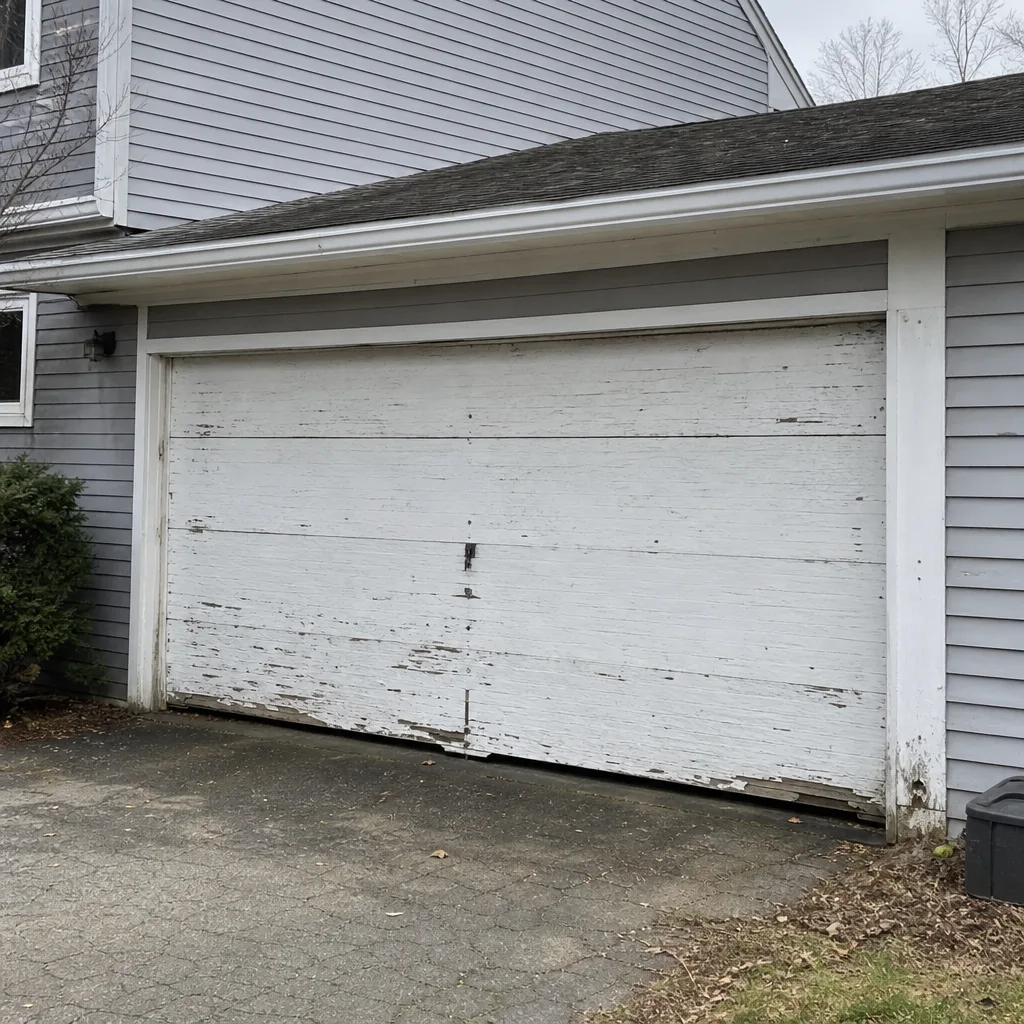 Before
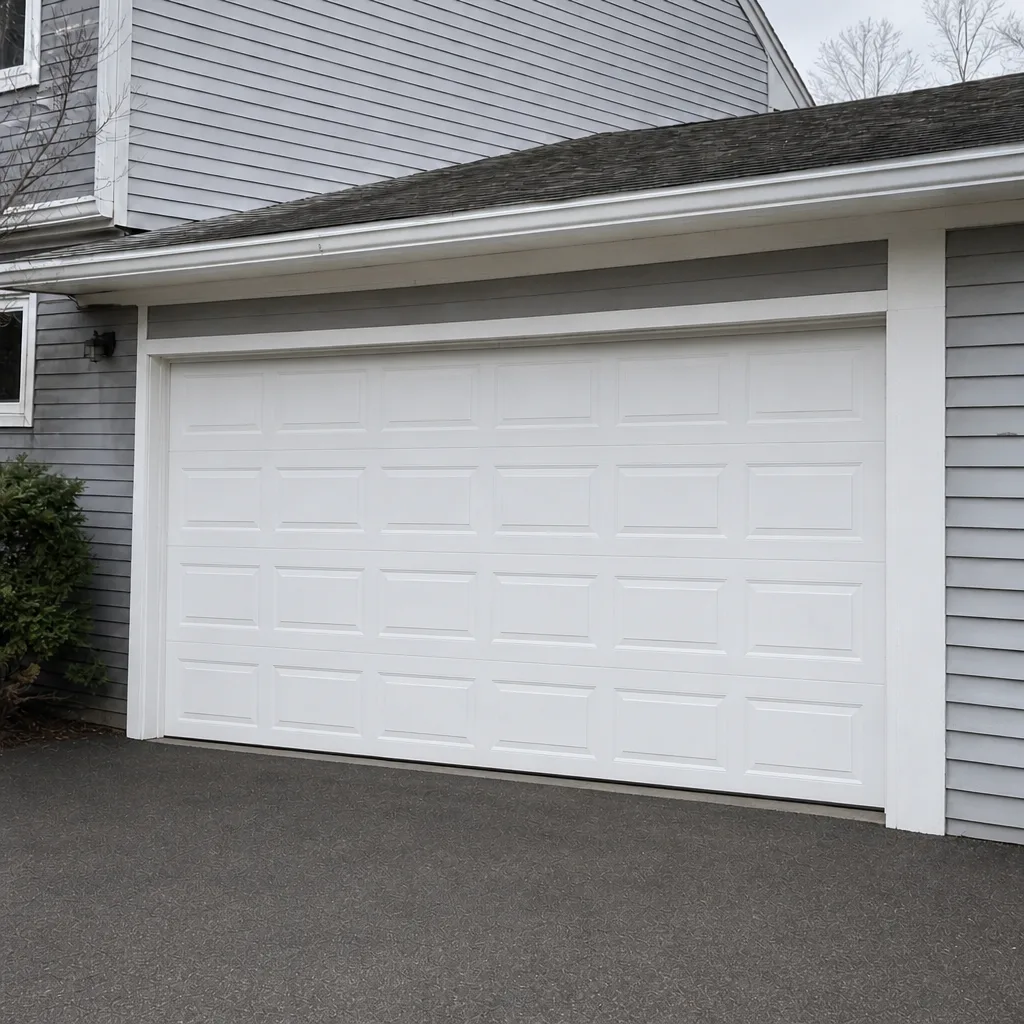 After
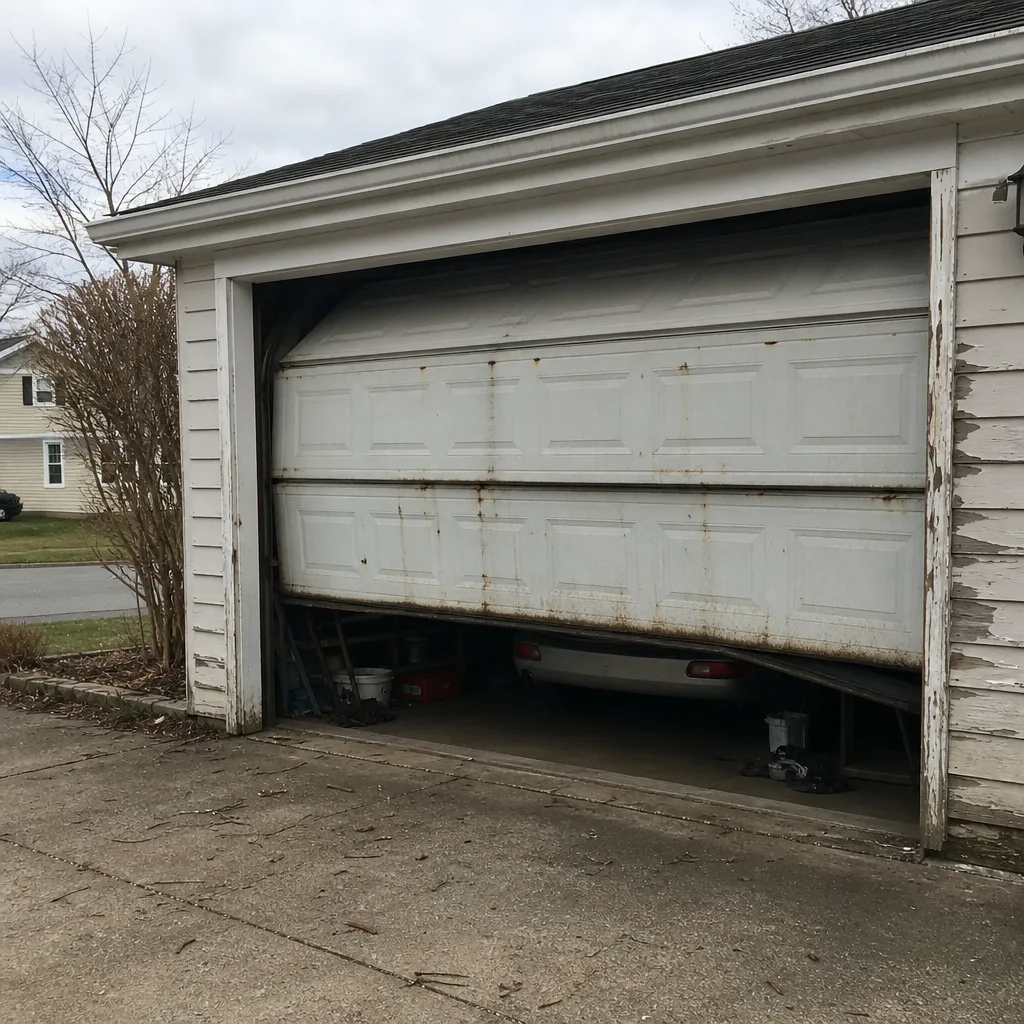 Before
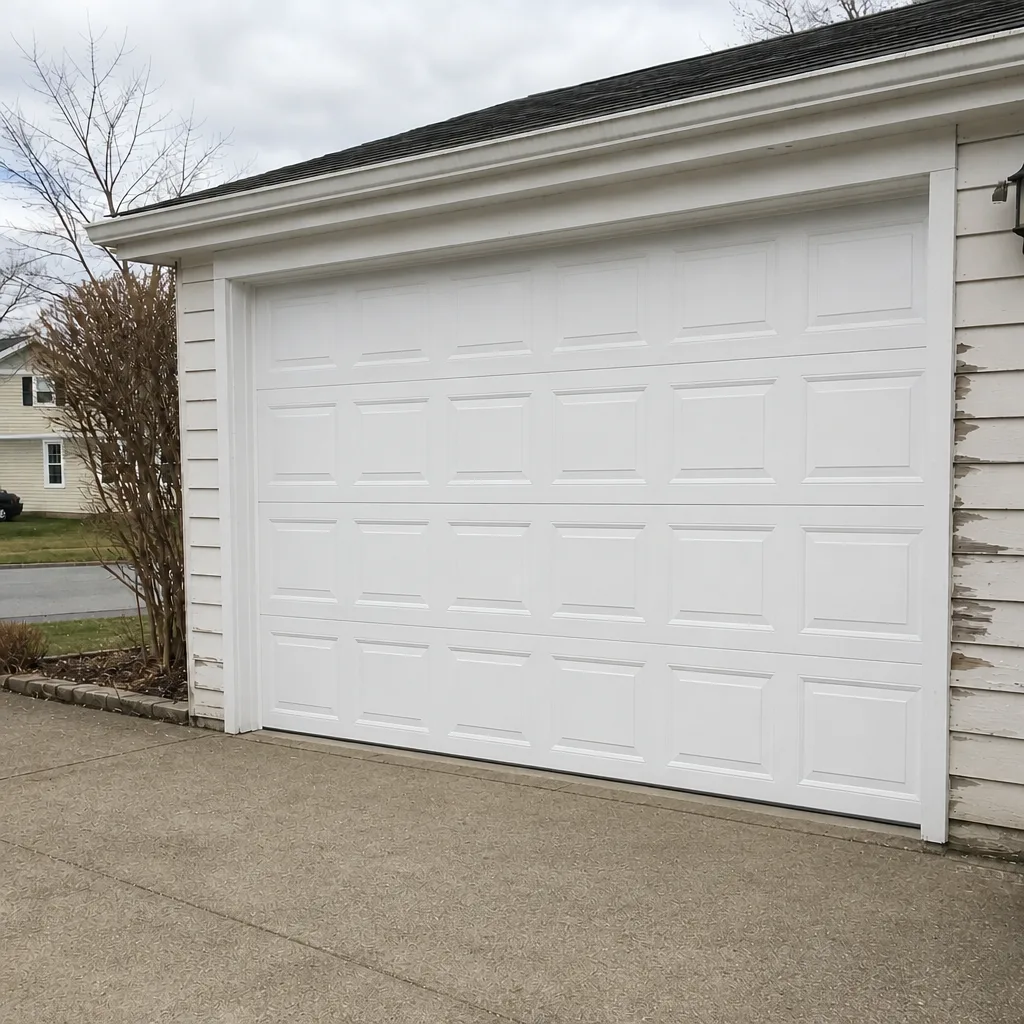 After
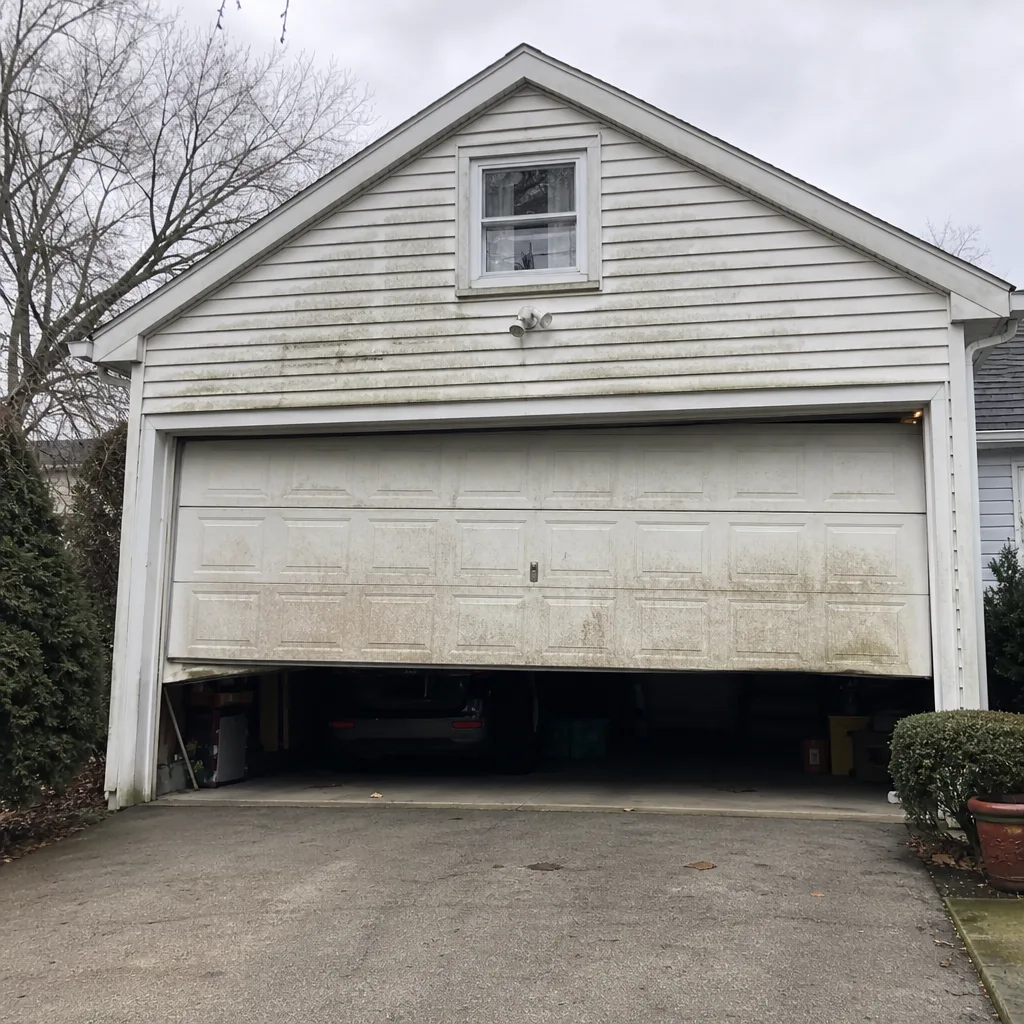 Before
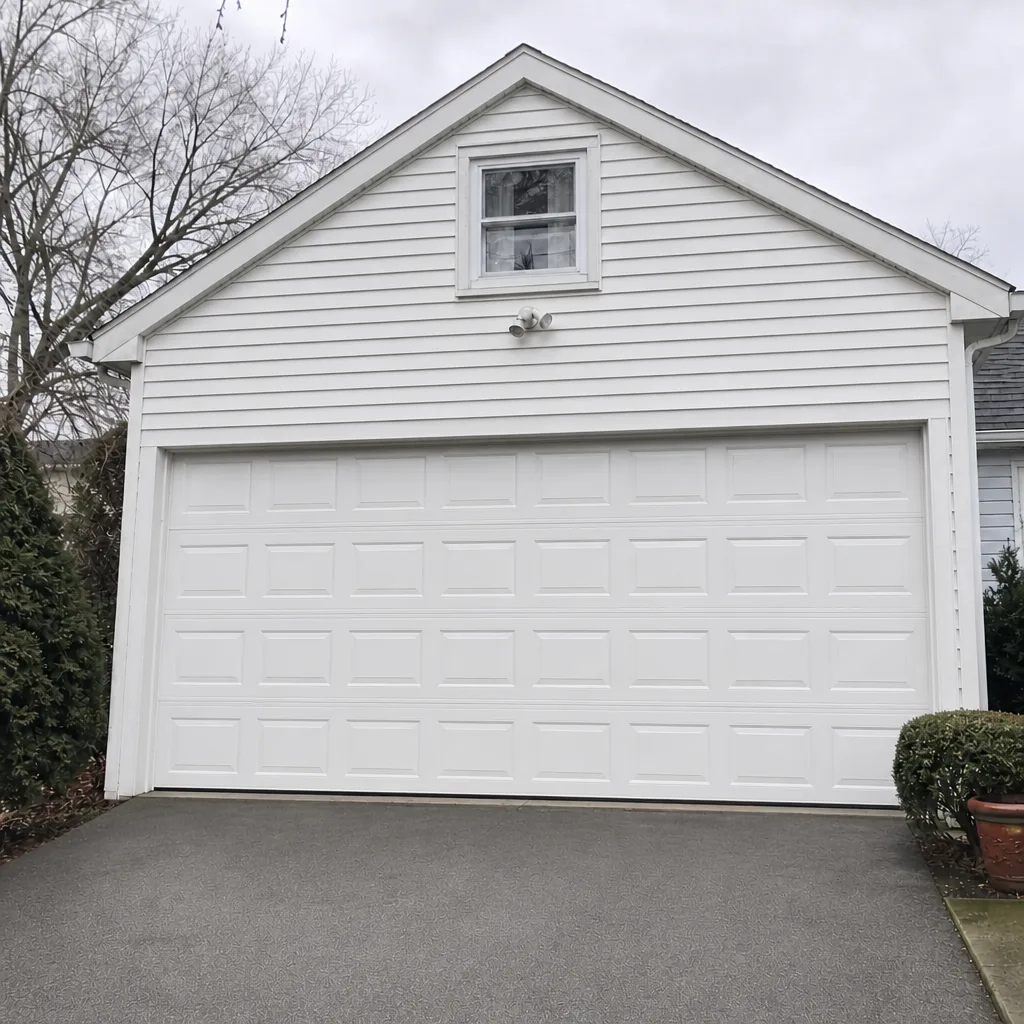 After
When to Call a Professional
Call a professional when you can’t lift the door by hand, when the door comes off its track, when a spring or cable is visibly damaged, or when the opener reverses for no reason. Call when the door is stuck open or won’t close and you need it resolved tonight. Call when you’re ready to buy a new door and want it measured and installed correctly the first time. And call when you’re not sure, because a free estimate is cheaper than a mistake. Framingham Garage Door Repair Pros offers free estimates in Framingham, and our technicians have up to 12 years of experience. We work on the brands actually on your home, including LiftMaster, Chamberlain, Genie, and Clopay, and we can help you sort out repair versus replace without pressure. Call (877) 665-1930.
Frequently Asked Questions
Most garage door repairs in Framingham run from around $150 to $400 for common jobs like spring replacement, cable repair, or roller and hinge work, with the exact figure depending on the part and the door. Openers and panel replacement cost more. The written estimate sets the final price, and we quote and agree on it before any work starts, so you don’t get an invoice bigger than the quote. Call (877) 665-1930 for an exact quote; estimates are free.
In most cases, yes. A door stuck open or a door that won’t close is exactly the kind of urgent situation our emergency garage door service line is built for, and we treat it as same-day work whenever we can. Call (877) 665-1930 and we’ll sort out the next available slot.
No. We inspect, quote, and agree on the price before any work starts. If we find something that changes the job, we tell you and re-quote before touching the door, so you always know what you’re paying. Call (877) 665-1930 to book a free estimate.
The local pro we connect you with is licensed and insured as Massachusetts requires. Our technicians have up to 12 years of experience, and we work on garage door and opener brands including LiftMaster, Chamberlain, Genie, and Clopay. Call (877) 665-1930 to talk through your door.
Insulated steel is the practical default for most Framingham homes because it handles freeze-thaw cycles, resists moisture, and holds up to road salt better than wood. Wood composite is a good fit where you want a traditional look that holds up better than natural wood in humid summers. Fiberglass resists moisture but can become brittle in deep cold.
Repair is usually the right call if the panels and frame are structurally sound. Replacement makes sense when the door itself is damaged, the wrong size, or too old to make safe. A free estimate will tell you which category you’re in, and we’ll explain the reasoning rather than push a sale. Call (877) 665-1930 for a straight answer.
The Bottom Line
Your garage door is a system, and the decisions you make before it fails determine how expensive and disruptive that failure is. Start by identifying what you have. Choose the door material for Framingham’s freeze-thaw winters and humid summers. Have the opening measured for real, especially in older housing stock. Then choose an opener that matches the door. Check your HOA and historic district rules before you shop. And when it comes to springs and cables, leave the work to a specialist. A door that’s measured right, matched to the climate, and maintained properly will serve you for years. Call (877) 665-1930 for a free estimate.
For a full overview of what we do, start at Framingham Garage Door Repair Pros. Written by the team at Framingham Garage Door Repair Pros.