Last updated November 22, 2026
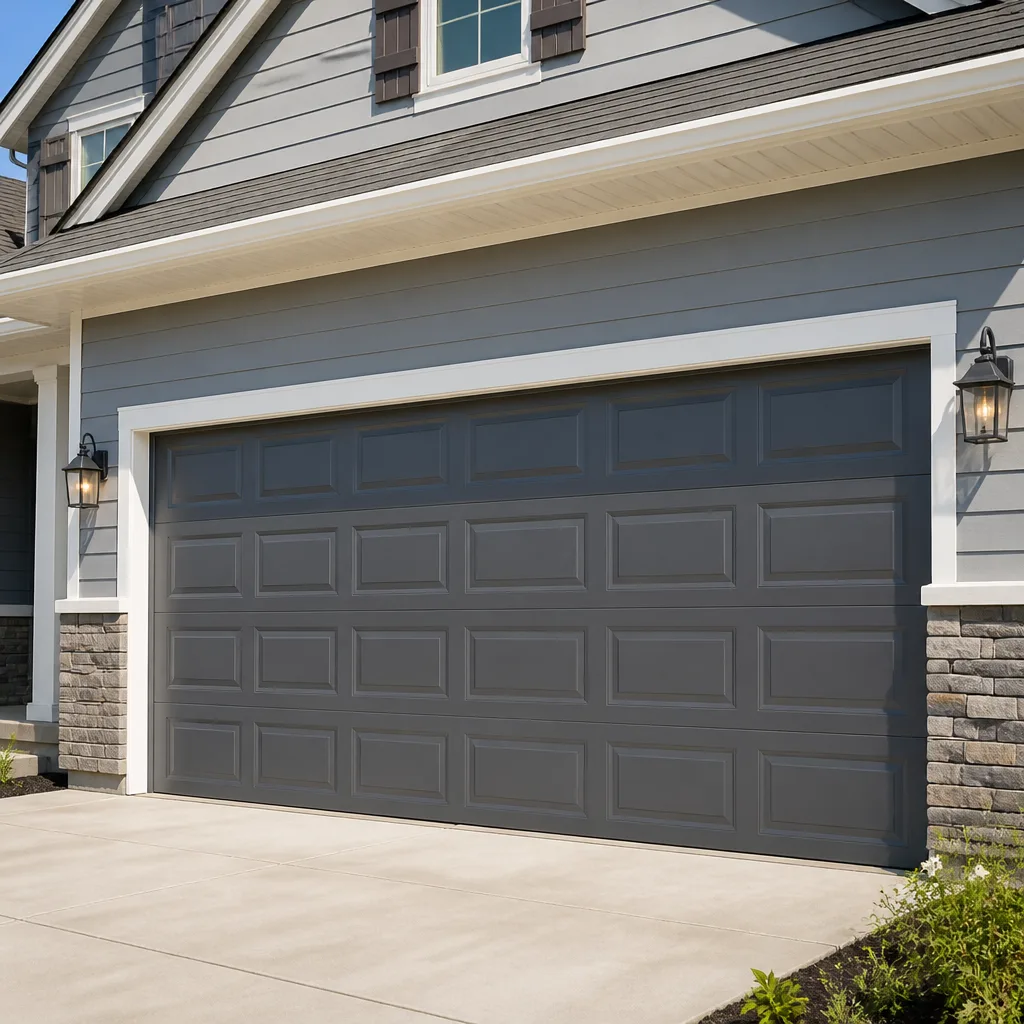 Raised-panel steel
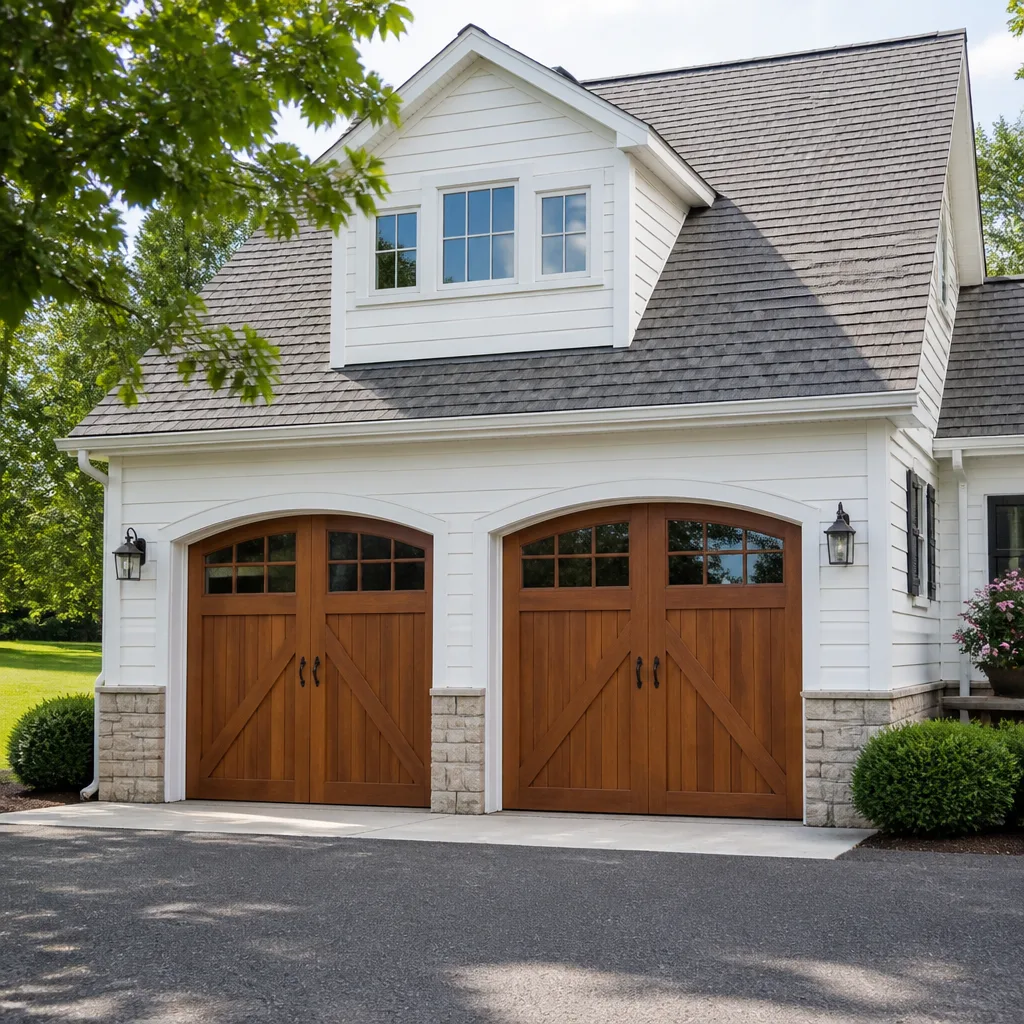 Carriage house
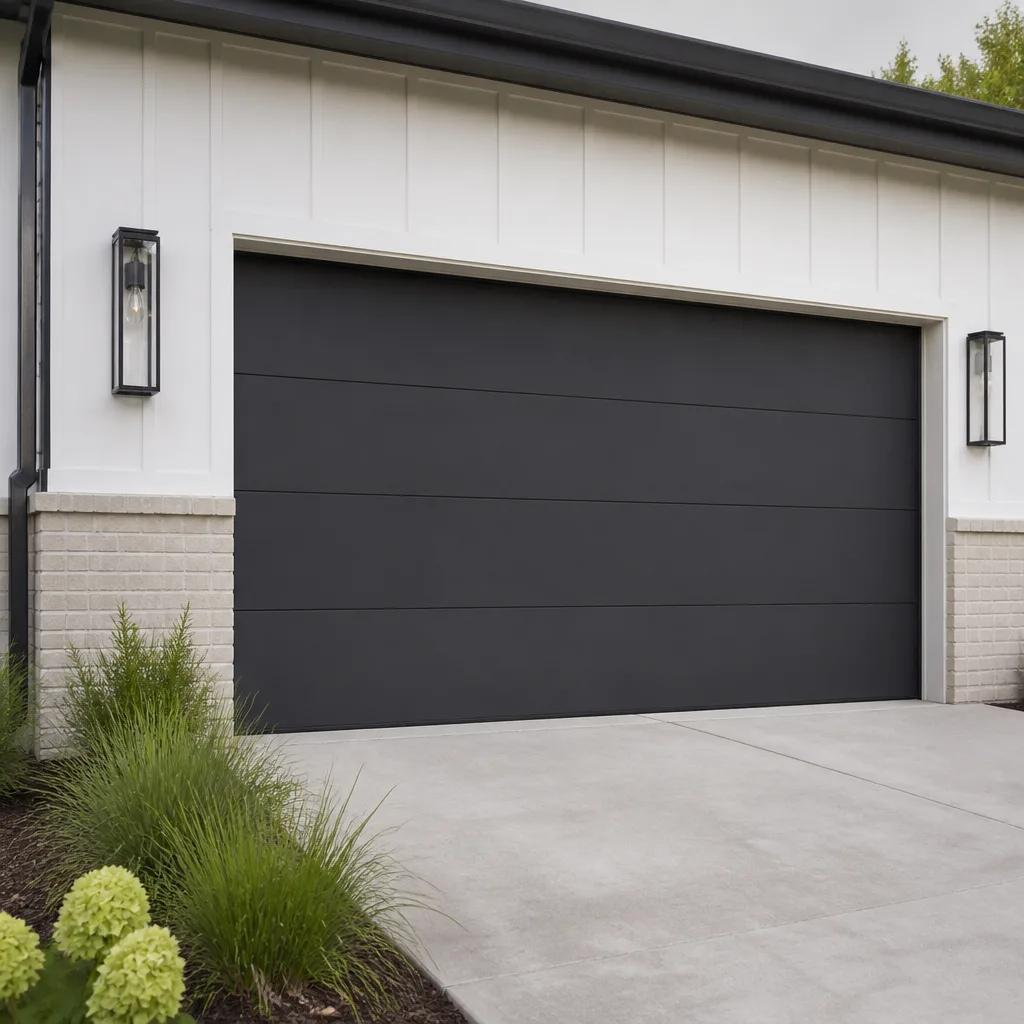 Modern flush
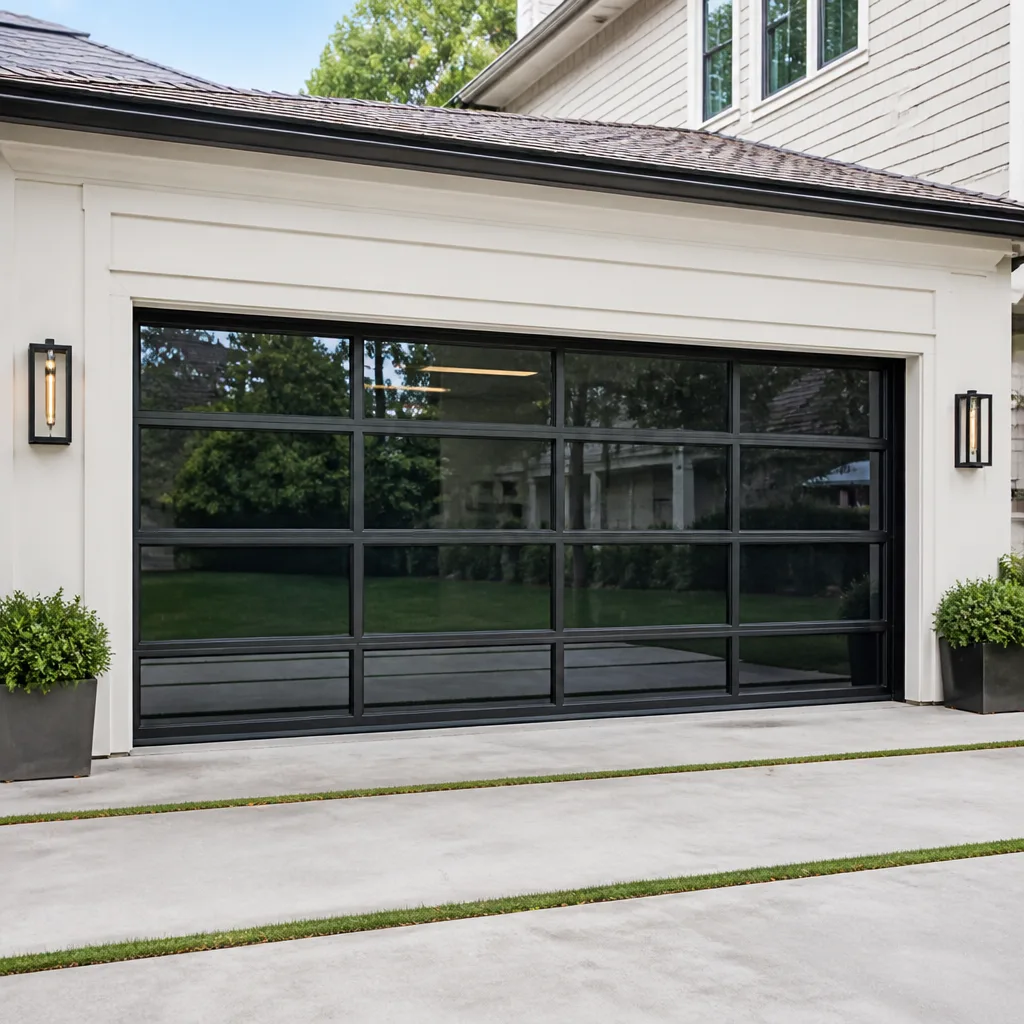 Full-view glass
 LiftMaster openers
 Chamberlain openers
Full 25-point door and opener safety check with every visit - springs, cables, rollers, tracks, and your LiftMaster or Chamberlain opener included
You get a price before we start. It does not change when the pro arrives.
Get your free estimateGarage Door Repair Maintenance Checklist for Framingham Homeowners
Most garage door advice you’ll find online was clearly written for a climate that doesn’t exist here. Generic checklists tell you to “lubricate twice a year” and “check the springs,” which sounds helpful until you realize the thing actually killing your door in Framingham isn’t age or neglect. It’s road salt. Every winter, the treatment crews lay down on Routes 9 and 126 and the side streets off them gets tracked into garages on tires and boots, and that salt-laden slush settles on the springs, bottom brackets, and hinges where it quietly eats through the steel. Torsion springs don’t usually snap from old age around here. They snap from rust pitting that started in February and nobody noticed. In this guide we’ll walk through a maintenance routine built around that reality, plus the wood-swelling humidity that shows up every July, and we’ll be honest about which tasks you should handle yourself and which ones should make you put the wrench down and call someone.
Quick Answer
The best garage door maintenance routine for Framingham is a seasonal one: a post-winter salt-and-corrosion inspection in spring, monthly balance and safety-reverse tests, a summer lubrication pass, and a fall weatherstripping check before heating season starts. Homeowners can safely handle cleaning, lubrication, visual inspection, and testing. Spring replacement, cable adjustment, and torsion hardware work should always go to a trained technician because those components are under extreme tension and can cause serious injury.
Styles & brands we work with
- Raised-panel steel
- Carriage house
- Modern flush
- Full-view glass
- LiftMaster openers
- Chamberlain openers
Table of Contents
- Why Framingham Doors Wear Differently Than Generic Advice Suggests
- The Post-Winter Salt Corrosion Inspection: Exact Spots to Check
- Why WD-40 Is the Wrong Lubricant and What to Use Instead
- The 10-Second Monthly Balance Test (No Tools Required)
- Weatherstripping, Drafts, and Your Heating Bill
- Your Seasonal Maintenance Calendar, Month by Month
- What’s Safe to DIY and What Should Stop You Cold
- Opener Care for Your Specific Brand
Why Framingham Doors Wear Differently Than Generic Advice Suggests
Framingham sits in a part of Massachusetts that swings hard between seasons. Winters bring repeated freeze-thaw cycles, which means meltwater from the road gets into every crevice of your door hardware, freezes overnight, expands, and pries at the gaps. Then it thaws and refreezes a few days later. That cycle does more mechanical damage to metal than a single cold snap ever could, and it happens over and over from December into March.
Then summer arrives with real humidity. Wooden door panels, wood jambs, and wood trim swell and contract through the wet months. Steel doors don’t swell, but their seals bake in the heat and their lubricant thins and runs. If your home sits near the low, wooded sections of Framingham or anywhere with heavy shade, the humidity sticks around longer and the drying-out takes longer too. Doors in full sun along an exposed driveway dry fast and warp in a different way.
That’s the core problem with copy-pasted maintenance advice. It treats every door as if it lives in a neutral climate, and Framingham is anything but neutral. We’ve seen how doors behave here specifically: a door that gets a spring cleaning and a proper re-lube in April tends to sail through the year, while one that gets ignored through the salt season starts showing symptoms by the following winter. The routines below are ordered around the seasons that actually stress your door, not an arbitrary six-month interval.
If something has already failed and you’re reading this while your door is stuck, skip ahead to the section on garage door repair, or call us directly and we’ll get someone out to look.
The Post-Winter Salt Corrosion Inspection: Exact Spots to Check
The single most valuable thing you can do each spring is a focused corrosion inspection on the metal parts of your door. Road salt doesn’t just sit on the surface; it pulls moisture out of the air and holds it against steel, which is why the damage concentrates in the places where salt slush pools and never fully dries. Look for two warning signs: a chalky white residue and orange or brown pitting under it.
Here’s where to look, in order, with a flashlight and a rag:
- The bottom brackets where the cables attach at the lower corners. These sit lowest, so they catch the most tracked-in slush and are often the first parts to show rust.
- The bottom panel itself, especially the seam where the bottom section meets the bottom seal. Salt collects in that valley and stays wet longest.
- The hinges at every joint between panels. Get down close and look behind the hinge leaf where moisture hides.
- The torsion spring coils and the bearing plates at the center and ends of the shaft, if your door uses torsion springs. Rust pitting along a coil is a genuine early warning sign of fatigue, and once a coil pits deeply enough it cracks instead of flexing.
- The track, particularly the lower few feet, where grit and dried salt build up and start to bind the rollers.
- The rollers themselves, for flat spots or gritty bearings from operating on a salt-dusted track.
Wipe the spots down, note anything that’s rusted through or pitted deeply, and take a photo. Surface dust you can clean. Deep orange pitting that’s flaking the metal is a repair conversation, not a cleaning one. Doing this one inspection every spring in Framingham is the difference between replacing a spring on your own schedule and having it fail on a cold morning when you need to get to work.
Why WD-40 Is the Wrong Lubricant and What to Use Instead
Grabbing the blue-and-yellow can and spraying hinges and rollers is the most common maintenance mistake we see, and it backfires. Standard WD-40 is a solvent-based water displacer, not a lasting lubricant. It cleans off the grime and the grease that was doing the real work, leaves a thin film that evaporates within weeks, and attracts dust while it’s wet. On a New England door, that dust plus leftover residue forms a gum that makes rollers stick instead of roll. So the door gets noisier, not quieter.
What you want is a proper garage door lubricant: a lithium- or silicone-based spray, or a purpose-made white grease, applied sparingly where metal meets moving metal. Here’s a simple order of operations for a spring and fall pass:
- Wipe each hinge, roller shaft, and bearing plate with a dry rag first. Get the grit off before you add anything.
- Give each hinge, roller stem, and bearing plate one short spray at the pivot points. Don’t coat the roller wheels, just the stems.
- Spray a light film along the torsion spring coils and the shaft. This is the part that fights the salt corrosion described above.
- Wipe the tracks dry with a rag. Tracks should be clean and dry, never greased; grease in a track captures sand and salt residue and turns it into grinding paste.
- Operate the door once or twice to spread the lubricant, then wipe away any excess that would hold dust.
Two passes a year is enough for most Framingham doors: one in early spring after the salt season, one in late fall before the first freeze. A door on a well-trafficked garage might want a mid-summer touch-up. If your door runs on a Raynor or LiftMaster system with a belt or screw drive, the same logic applies to the hardware; never grease the drive mechanism itself, only the moving metal parts.
The 10-Second Monthly Balance Test (No Tools Required)
This is the most underrated maintenance habit there is, and any homeowner can do it in under a minute with no tools. A door with a failing spring is a door running out of balance, and the balance test catches that slow decline long before the spring snaps. It works because it measures the one thing a weakening spring can’t fake: whether it can still hold the door’s weight.
- Disconnect the opener by pulling the release cord so the door runs free by hand.
- Lift the door to about halfway and let go, holding nothing.
- Watch what it does. A balanced door stays put or drifts just a little. A door that sinks steadily to the floor has a spring losing tension or a cable issue.
- Reconnect the opener.
Do this once a month and you’ll have weeks of warning before a spring goes. Pair it with a quick safety-reverse check: place a roll of paper towels or a small box in the door’s path and hit the close button. The door should reverse on contact. If it keeps going, the opener’s force settings or the safety sensors need attention.
Any door that fails the balance test, runs hard, or reverses late is telling you something needs professional eyes. We use that same basic logic on every visit, and it’s part of why we recommend booking a real garage door opener repair check if the reversal test misbehaves.
Weatherstripping, Drafts, and Your Heating Bill
A failed bottom seal is easy to write off as a minor draft, but in a Framingham garage attached to a home, it’s an energy problem. Cold air pours in under a worn seal and pushes against the door leading into the living space. That colder air makes your furnace work harder all winter, and in summer the same gap lets cooled air escape. During the humid months, a bad seal is also a moisture path, which is exactly what drives swelling in wooden jambs and the bottom panel of a wood door.
These are the seal locations to inspect each fall:
- The bottom weather seal: check for cracks, flat spots, tears, and gaps at the corners when the door is closed. Sit on the floor with a light and look for daylight.
- The side and top trim seals: run a hand along the jamb while the door is closed. You’ll feel leaking air at any gap.
- The bottom seal retainer: the metal channel holding the seal. If it’s rusted or bent, the seal won’t sit flat no matter how new it is.
- Wood jamb and trim faces: look for soft spots, paint failure, or swelling, which trap moisture and let the seal pull away.
Bottom seals are inexpensive and among the more reasonable homeowner jobs, but if the bottom panel is warped or the retainer is rusted, a replacement seal won’t solve the problem. That’s when we’d recommend a look at the whole door, possibly through garage door installation if the door itself is aging out. Sealing the garage before heating season is a far smarter spend than the heating bill that follows a failed seal.
Your Seasonal Maintenance Calendar, Month by Month
Here’s how the whole routine lands across a Framingham year. Treat this as the spine of your maintenance habit, then adjust for how much your door actually gets used.
- March-April: post-winter salt inspection. Wipe down springs, brackets, and hinges, check for pitting, and note anything that’s failed. This is the big one for Framingham specifically.
- April: full spring lubrication pass. Fresh lubricant on hinges, rollers, springs, and bearing plates after all the gritty winter buildup is cleaned away.
- Monthly, all year: the balance and reverse test. Ten seconds, no tools, catches spring decline early.
- June-July: humidity check. Look for wood swelling on panels and jambs, tighten loose hinge screws that have backed out of swollen wood, and confirm the door still closes flat against the seal.
- September-October: weatherstripping inspection. Do this before heating season so a bad seal doesn’t cost you all winter.
- October-November: fall lubrication pass. Re-lube before freeze-up so winter’s meltwater finds a protected surface.
- December-February: keep the garage clean of tracked-in salt. A quick sweep or rinse of the garage floor after snowy drives reduces what migrates onto the door hardware.
A door that gets this treatment is on a maintenance cadence we understand well, because garage doors are all we do. Whether your door runs on a Raynor or a LiftMaster system, the seasonal logic holds. If you’d rather have someone walk the door with you once and set the routine right, that’s a conversation we’re happy to take. Our team can be reached at (877) 665-1930 for a free estimate.
What’s Safe to DIY and What Should Stop You Cold
Honest maintenance advice draws a hard line between tasks, because some of these components store enough energy to seriously hurt someone. We’d rather you know exactly where that line is.
Safe for homeowners:
- Wiping down and lubricating hinges, rollers, and spring coils.
- Cleaning the tracks with a rag and inspecting for grit.
- Running the monthly balance and safety-reverse tests.
- Replacing a bottom weather seal if the retainer and panel are sound.
- Visual inspection and photography of any suspected damage.
Stop and call:
- Torsion spring or extension spring replacement. These springs hold the full weight of the door under extreme tension. Adjusting or removing them incorrectly can cause severe injury. This is the classic job a home handyman should never take on, and it’s why we treat garage door repair for spring work as specialist territory.
- Cable work. Cables are always under tension and can snap with enough force to injure. Never loosen or detach one.
- Loosening the torsion shaft or bearing plates to chase a noise. That’s the load-bearing hardware.
- Realigning a bent track, which can cause the door to fall out of the track or off its rollers.
- Replacing bottom brackets, which are cable anchors under load.
There’s a good reason we’ve made spring repair its own service line. It’s the most dangerous job in this trade and the one most often botched by people who don’t know the difference between a wound spring and a relaxed one. If you suspect a spring is failing, don’t test it by hand. Call, and let a technician look.
Opener Care for Your Specific Brand
Your opener needs attention too, but it’s usually simpler than the door itself. The main things are keeping the safety sensors aligned and clean, checking the mounting bolts so vibration doesn’t back them loose, and confirming the drive belt or screw isn’t binding. If the opener is running but the door is moving slowly or jerking, the problem is more likely the door’s balance or hardware than the motor, which is why the balance test matters before you blame the opener.
We work on eight of the most common door and opener brands you’ll find on Framingham homes, including LiftMaster, Chamberlain, Genie, Clopay, Amarr, Wayne Dalton, Craftsman, and Raynor. That brand familiarity means we know the parts, the quirks, and the failure points for the system that’s already on your home, rather than having to guess. If your opener is older or struggling and you’re weighing a replacement, that belongs in a conversation about garage door installation before it becomes an emergency.
And when it does become an emergency, like a door that won’t close on a cold night or a spring that lets go while you’re backing out, that’s what our emergency garage door line is for. A stuck door is a safety question, not just a hassle, and we take those calls seriously.
Common Mistakes to Avoid
- Using standard WD-40 as a long-term lubricant. It thins the grease that was protecting your hardware, attracts dust, and pulls grit into the rollers. Use a proper garage door lubricant and apply it sparingly.
- Skipping the spring corrosion check because the door still looks clean. Salt residue and pitting hide along the coils and behind hinge leaves, where you won’t see them from across the driveway.
- Greasing the tracks. It feels like it should help, but in a salt-and-sand climate it turns the track into grinding paste and wears out the rollers faster.
- Ignoring a failed bottom seal until winter. The heating bill you notice in January was set in October, and the moisture damage to a wood jamb is harder to fix than the seal ever was.
- Trying to “tighten” a sagging door by adjusting the springs yourself. Anything under torsion load can’t be safely handled without the right training and tools. Stop, take a photo, and call.
- Assuming a slow or noisy door is an opener problem. It’s usually a balance, lubrication, or hardware issue on the door itself, so test the balance before buying a new opener.
- Letting the fall season pass without a lubrication pass. It’s the easiest way to make sure winter’s meltwater meets a protected spring rather than bare steel.
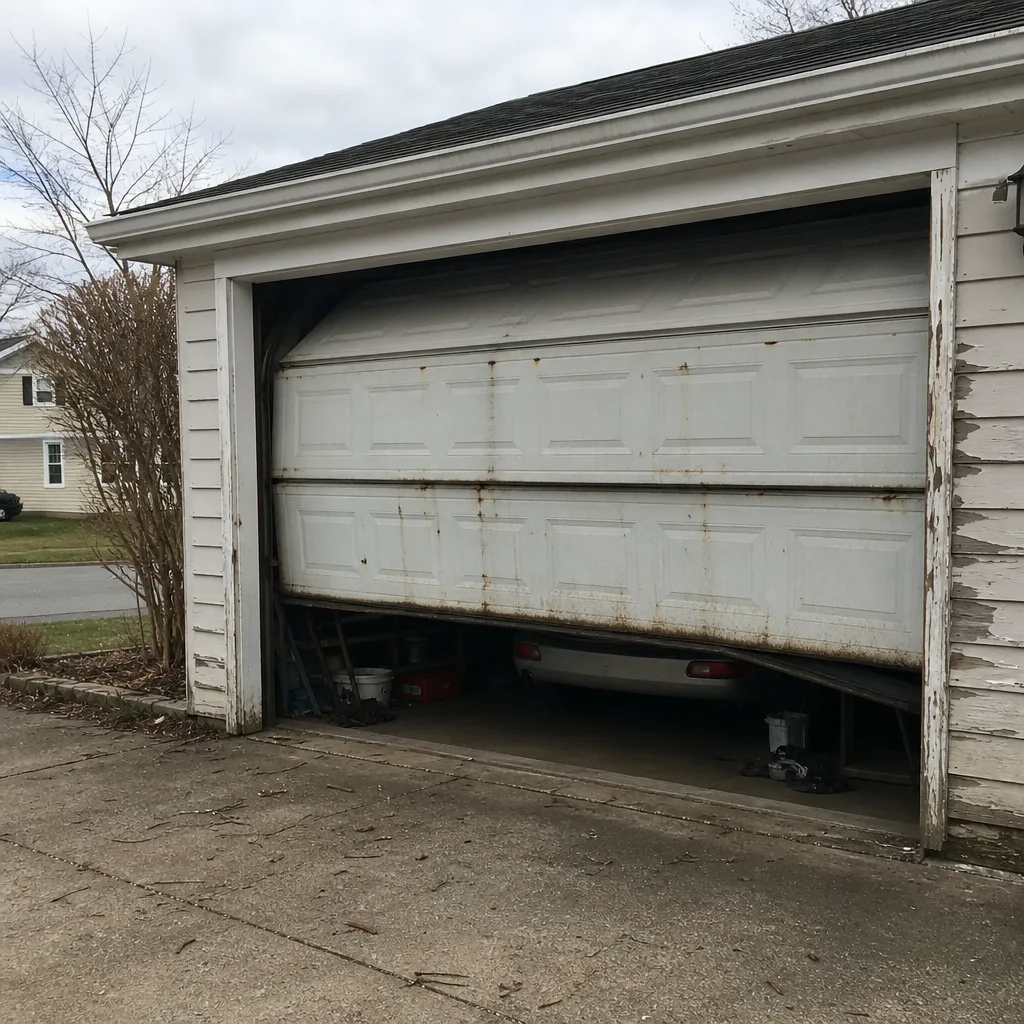
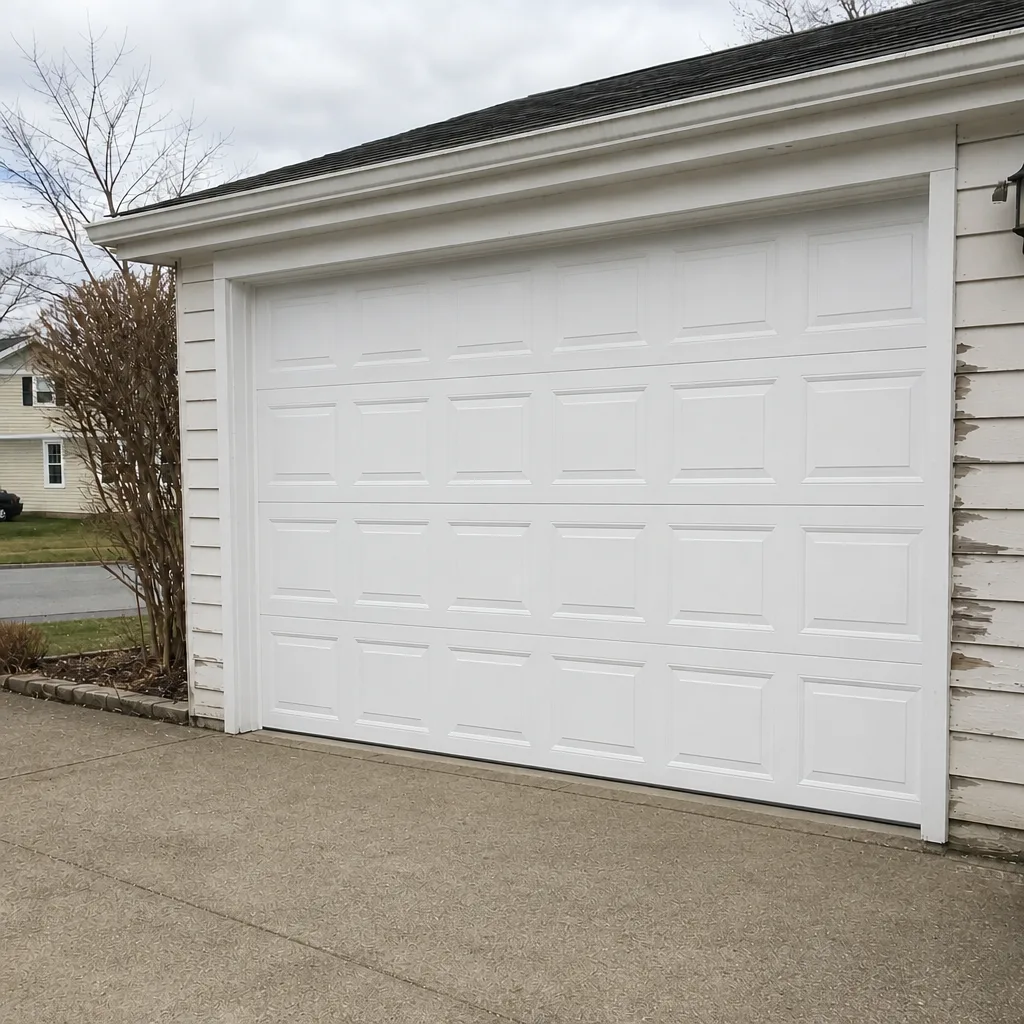
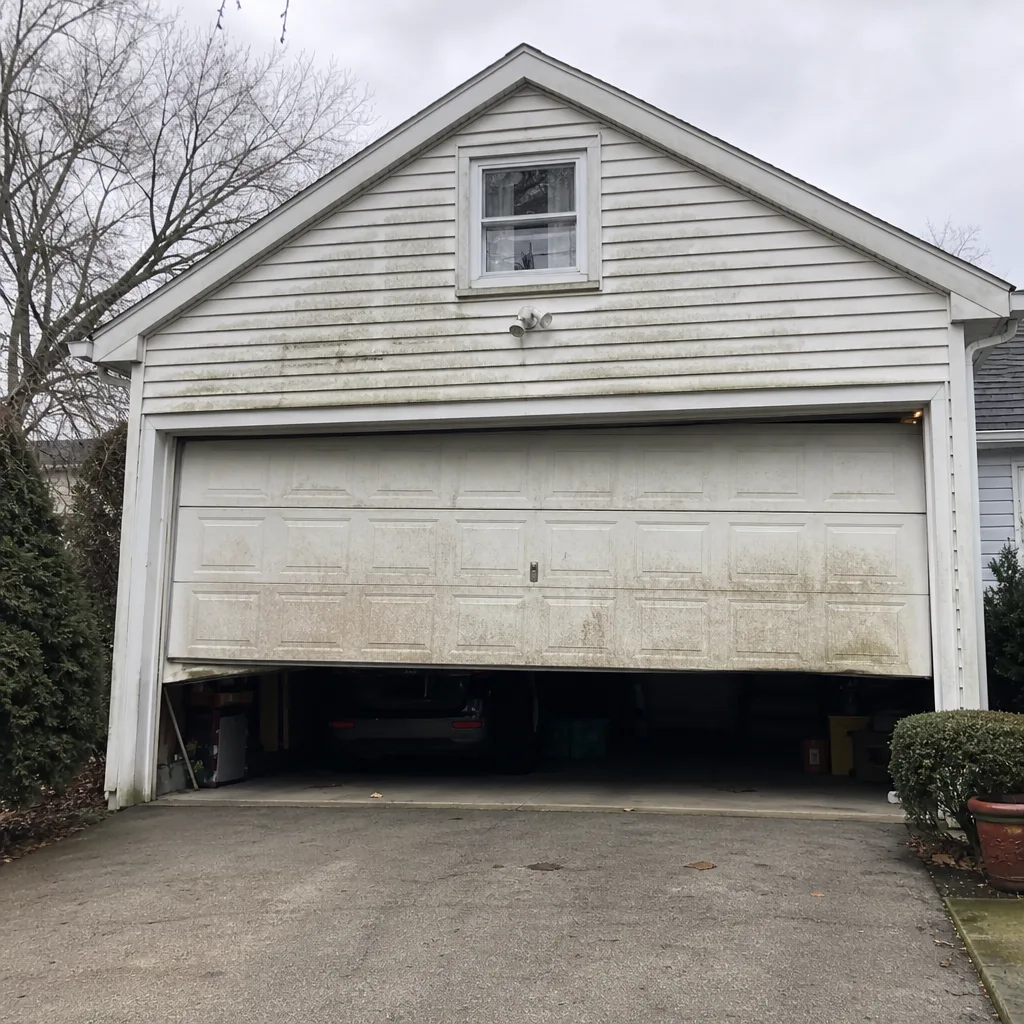
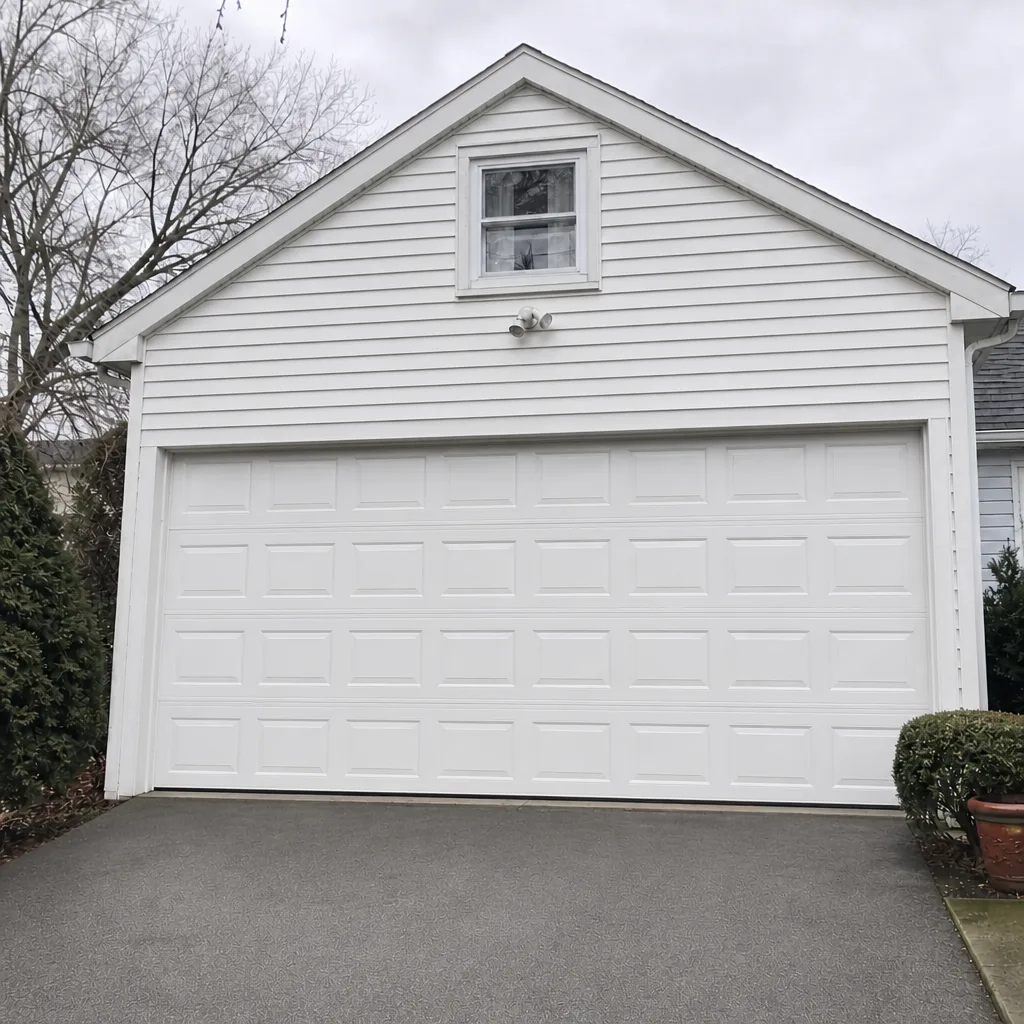
See the difference
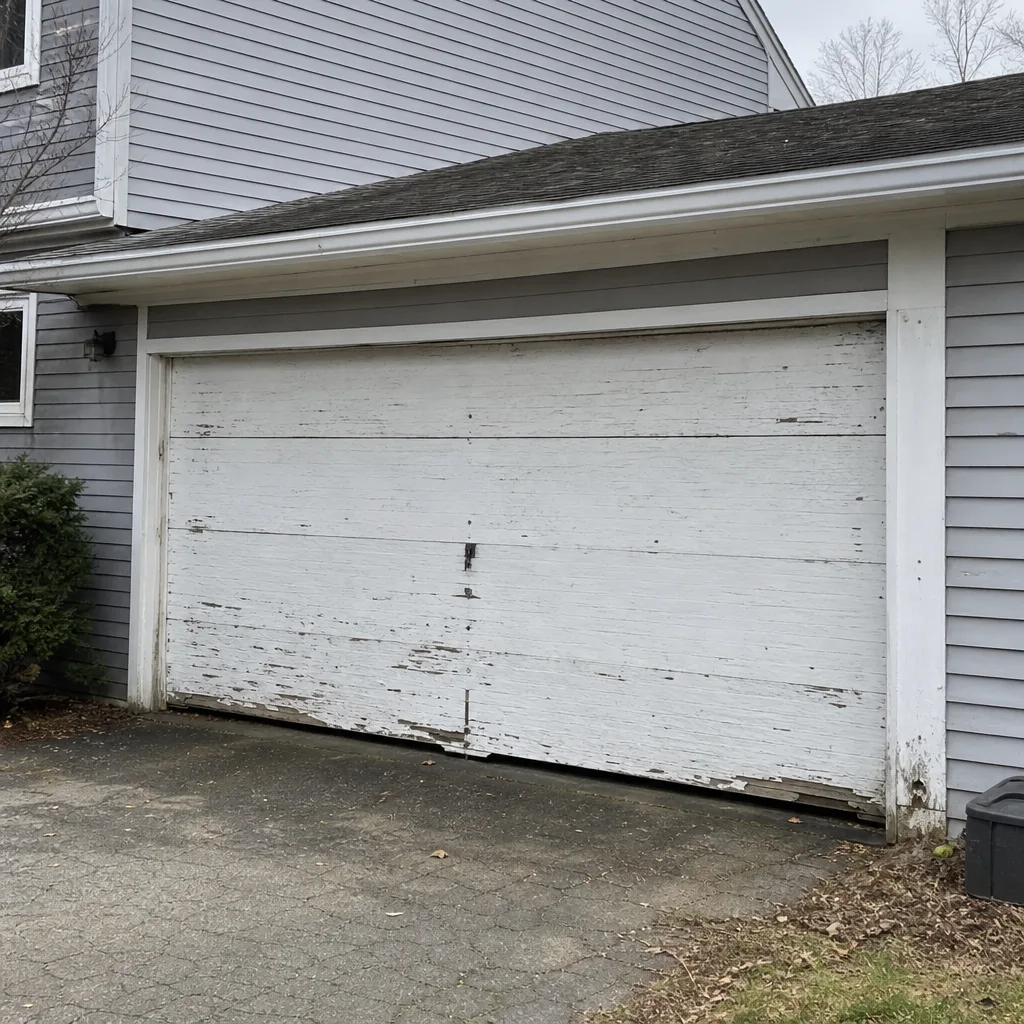 Before
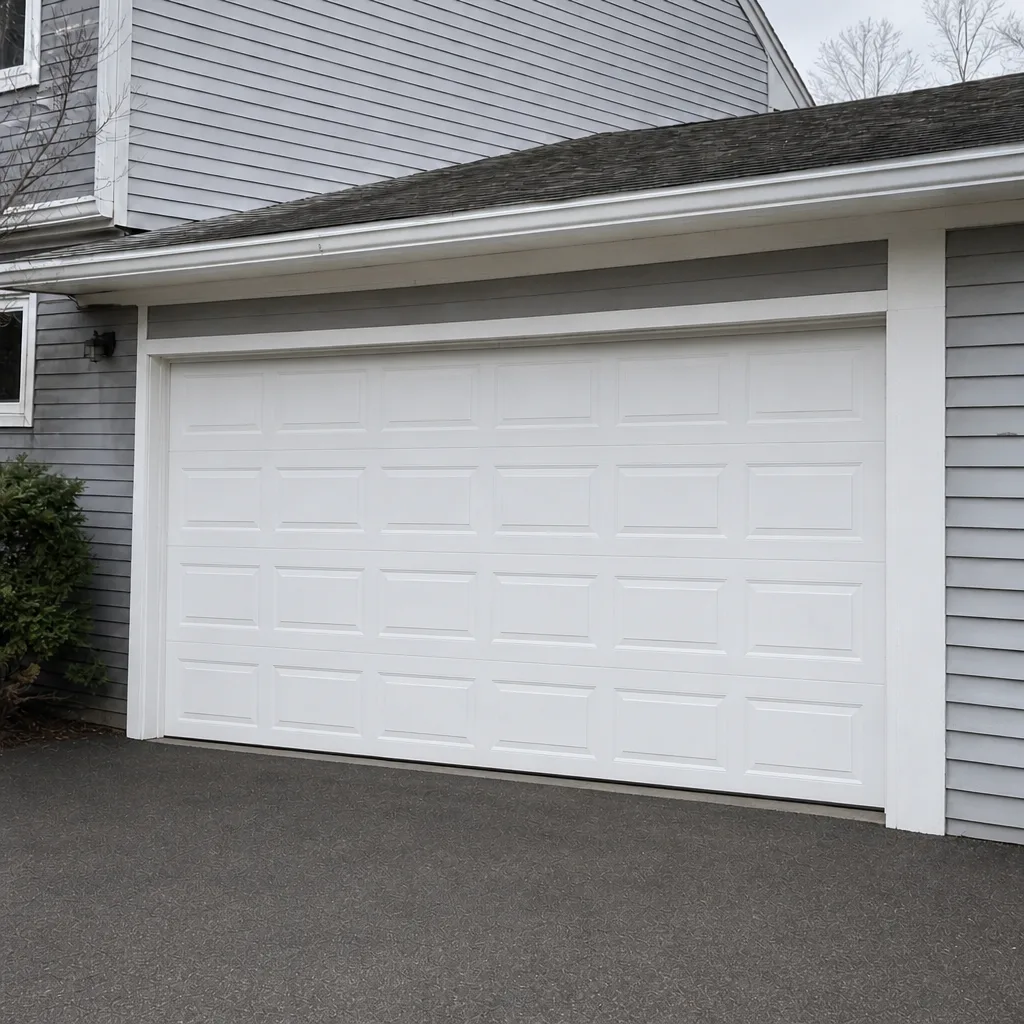 After
 Before
 After
 Before
 After
When to Call a Professional
Some failures announce themselves loudly and some creep in quietly. Call a technician when a spring looks rusted or pitted, when the balance test fails twice in a row, when the door reverses late or not at all on the safety test, or when a cable looks frayed or loose. Call immediately if the door is stuck open, won’t close, is off its track, or makes a loud bang that puts it out of alignment. These are safety situations, not DIY situations. Framingham Garage Door Repair Pros offers free estimates in Framingham – call (877) 665-1930. Our technicians have up to 12 years of experience, and the price is always quoted and agreed before any work begins. You’ll know the written estimate before anyone touches the door.
Frequently Asked Questions
A full check twice a year, once in early spring after the salt season and once in late fall before the first freeze, covers the seasonal stressors here. Fill in the gap with the monthly balance test, which takes about ten seconds and catches most spring decline early.
No. Standard WD-40 is a water displacer and solvent, not a lasting lubricant, so it strips existing grease and attracts dust that gums up the rollers. Use a lithium- or silicone-based garage door lubricant instead, applied sparingly to hinges, rollers, and spring coils. Call (877) 665-1930 if you’d like us to set the routine up for you.
Check for salt corrosion on the bottom brackets, the bottom panel seam, the hinges, the torsion spring coils, the lower track, and the rollers. Look for chalky white residue and orange pitting under it, and wipe the hardware down. If you find deep pitting after a hard winter, a technician visit is worth the call.
No, a garage door spring should never be replaced by a homeowner. Torsion and extension springs hold the full weight of the door under extreme tension, and adjusting or removing them incorrectly can cause serious injury. Spring work is best left to trained technicians. Call (877) 665-1930 and we’ll handle it.
No. We quote a written estimate before any work starts and the price is agreed before a technician touches the door, so the final cost matches the estimate. If we find something new while working, we’ll talk it through before we do anything else. Estimates are free.
Run the balance test: disconnect the opener, lift the door halfway, and let go. If it sinks, the spring is losing tension and needs a look. If it also fails the safety-reverse check, call us right away.
The Bottom Line
Maintenance in Framingham is about the seasons that actually stress your door: the salt season that eats at your springs and brackets, the humidity that swells your wood, and the freeze-thaw cycles that pry at every gap. A spring salt inspection and a fall lubrication pass, plus the monthly ten-second balance test, will catch most problems long before they become failures. Do the cleaning, testing, and lubrication yourself. Leave spring and cable work to a technician, because those components can hurt you. Book the season’s maintenance with confidence at Framingham Garage Door Repair Pros, where garage doors are all we do, and call us at (877) 665-1930 for a free estimate.
Written by the team at Framingham Garage Door Repair Pros.