Last updated November 22, 2026
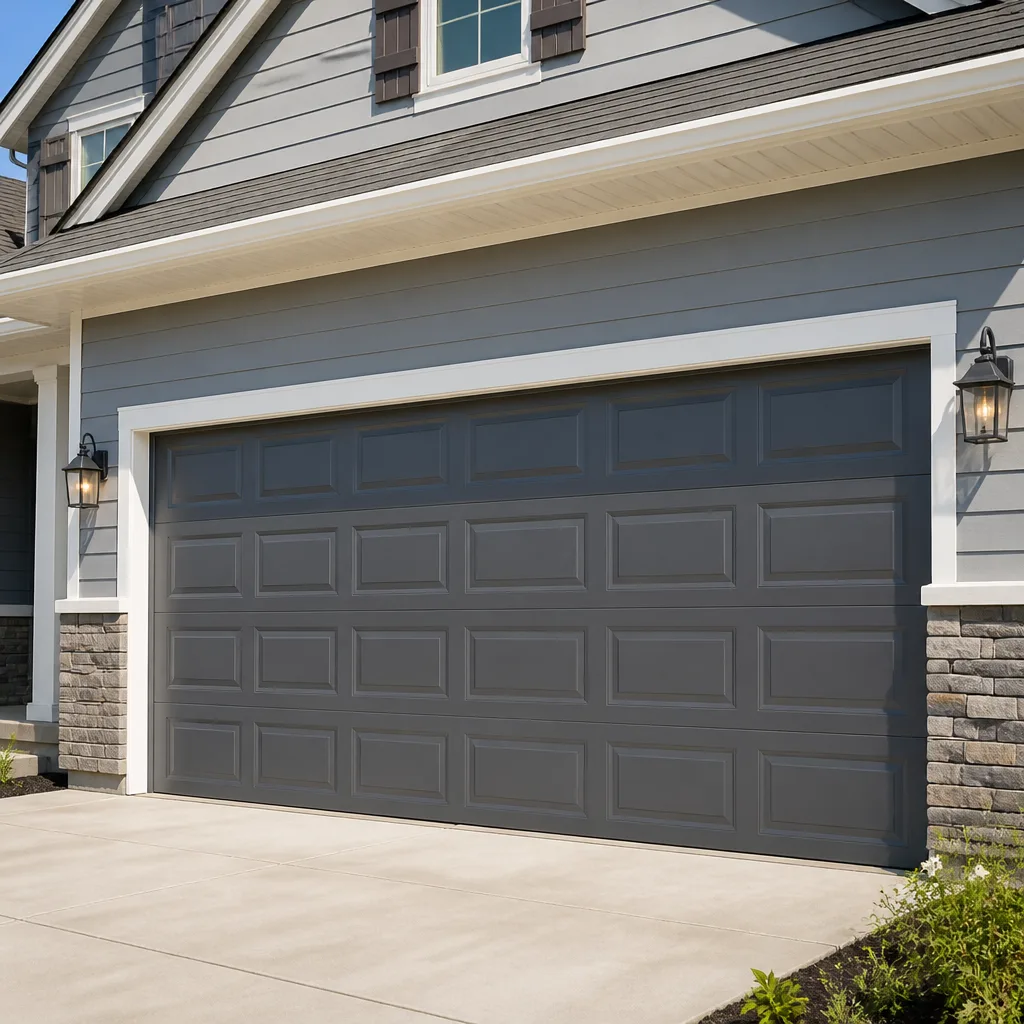 Raised-panel steel
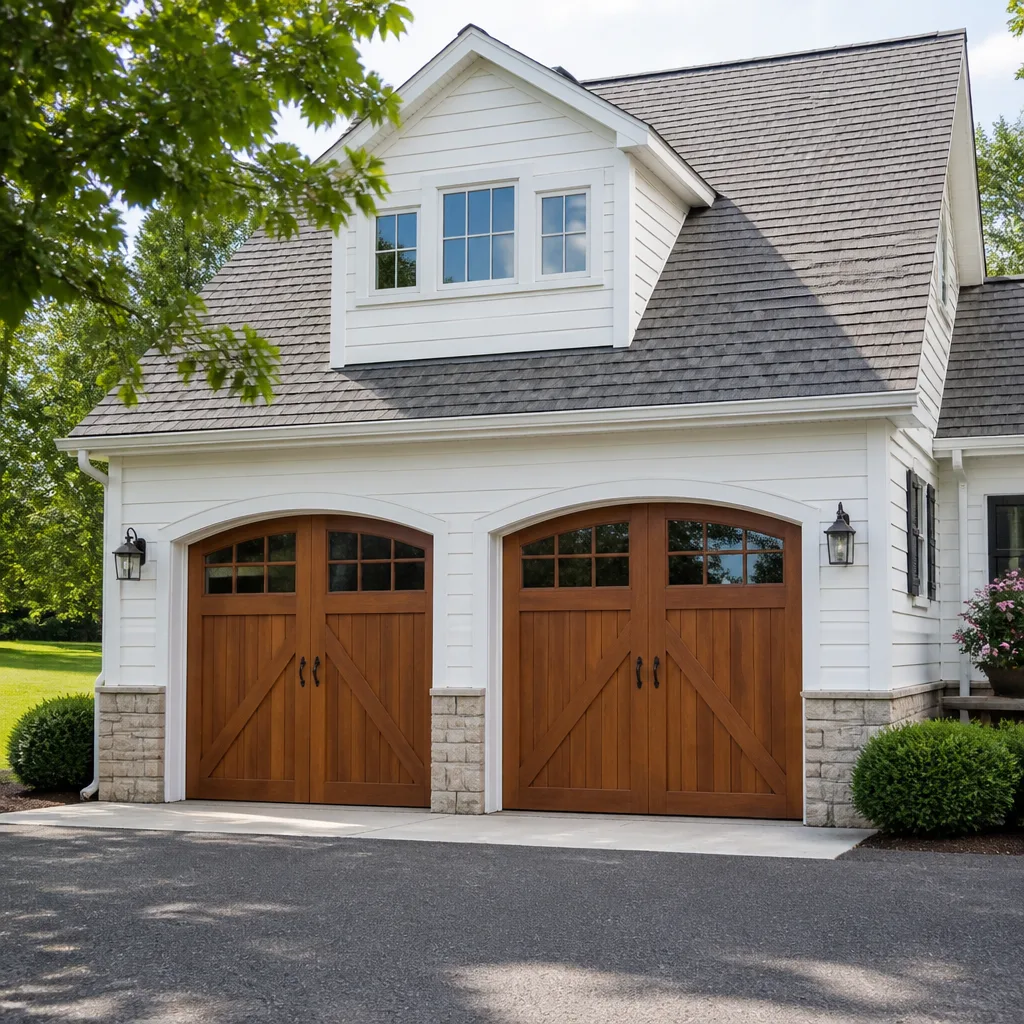 Carriage house
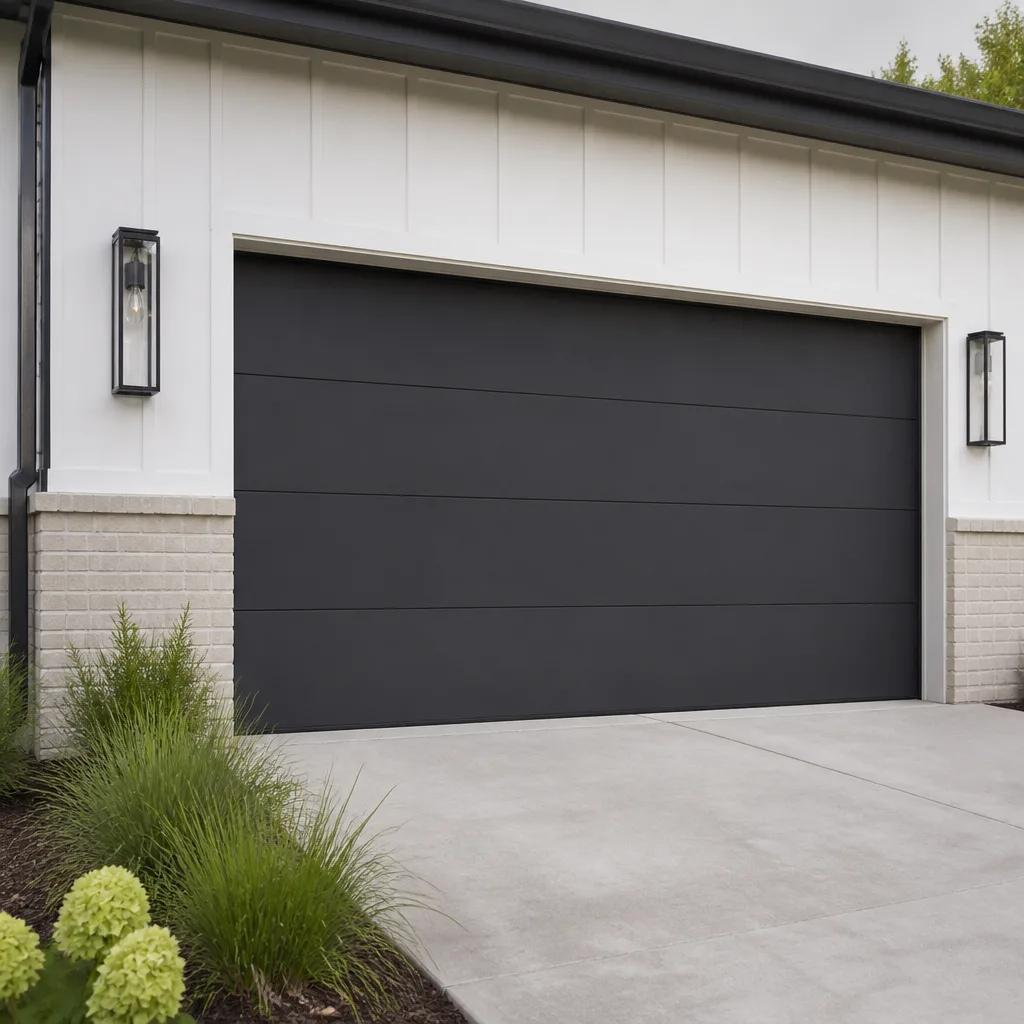 Modern flush
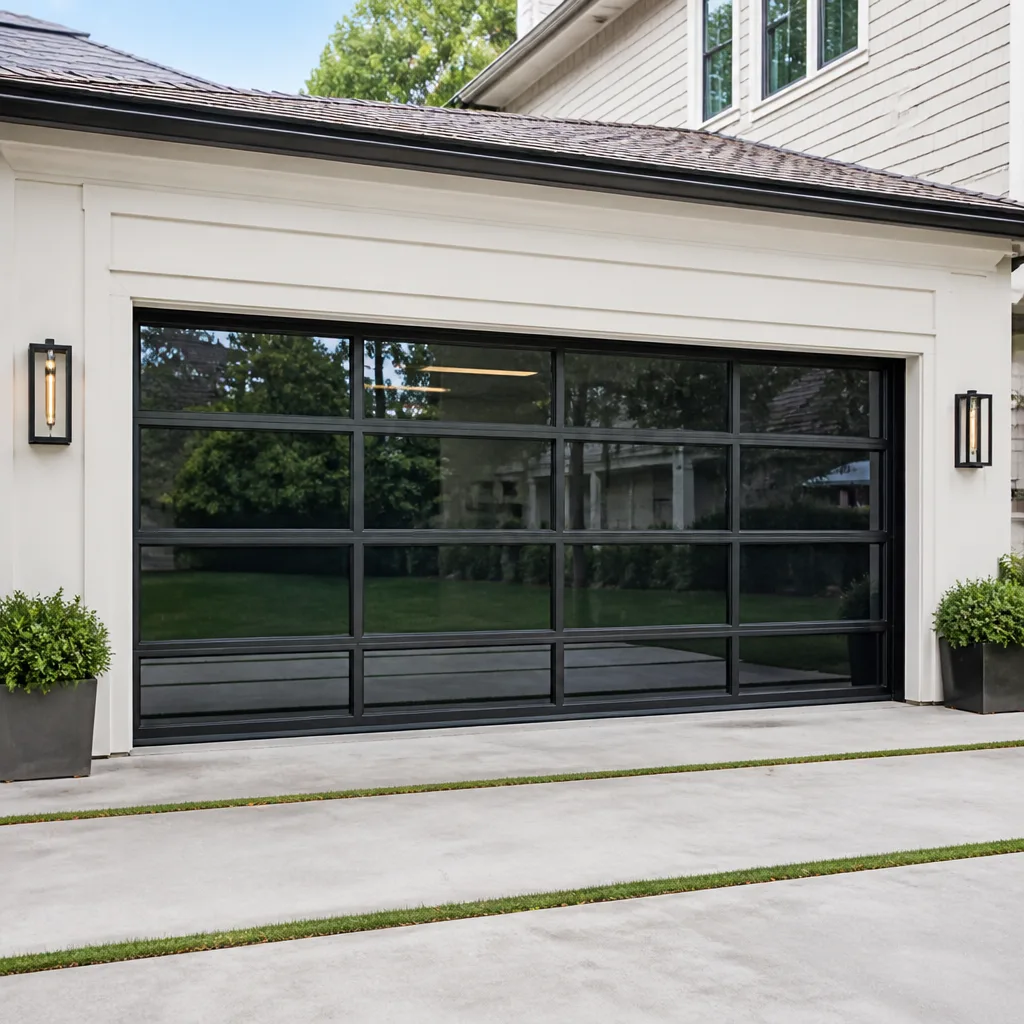 Full-view glass
 LiftMaster openers
 Chamberlain openers
Full 25-point door and opener safety check with every visit - springs, cables, rollers, tracks, and your LiftMaster or Chamberlain opener included
You get a price before we start. It does not change when the pro arrives.
Get your free estimateChoosing the Right Garage Door Brand: A Buyer’s Guide for Framingham
Most garage door brand comparisons you’ll find online are written by people selling doors, or by affiliates earning a commission on whatever link you click. That makes them useful for reading specs and close to useless for the question that actually matters: when something breaks two winters from now, can a technician in Framingham get the part? The brand name stamped on your door means less than the parts ecosystem behind it. A door that looks flawless in a showroom is a liability if its spring, roller, or bottom seal needs a special order that takes a week to arrive while your car sits in the driveway. This guide evaluates the brands most commonly installed around here through the lens of parts availability, local service support, and how they hold up under real New England weather. You’ll learn how to read a spec sheet past the marketing, what “lifetime warranty” actually covers, and why the most common smart choice in Framingham isn’t a premium brand at all.
Quick Answer
For most Framingham homes, the best garage door brand is the one whose replacement parts a local technician can get quickly, usually a mid-tier line from Clopay, Amarr, or Wayne Dalton paired with a LiftMaster or Genie opener. Premium brands rarely justify their extra cost here, and the cheapest lines cost more over time because parts are hard to source and weatherseals fail fast. The honest metric isn’t the logo on the door; it’s how fast a real part can reach your driveway.
Styles & brands we work with
- Raised-panel steel
- Carriage house
- Modern flush
- Full-view glass
- LiftMaster openers
- Chamberlain openers
Table of Contents
- Why the Parts Ecosystem Beats the Brand Name
- How Brands Perform Under Framingham’s Freeze-Thaw Cycles
- Steel Gauge: The Most Honest Durability Metric
- Warranty Terms Decoded for New England Homes
- The Mid-Range Value Case for Framingham Installs
- Opener Brands: Where LiftMaster, Chamberlain, and Genie Differ
- A Five-Step Process to Evaluate Any Brand Locally
- Common Mistakes to Avoid
Why the Parts Ecosystem Beats the Brand Name
A garage door is a system of moving parts, and parts wear out. Springs fatigue. Rollers flat-spot. Bottom seals crack. Hinges loosen. The brand you choose decides how easily a technician can replace those pieces without waiting on a warehouse three states away. That single fact should drive your decision more than any brochure photo.
Here’s how to evaluate a brand’s parts ecosystem in your area before you commit:
- Ask what happens when a spring breaks. Standard torsion and extension springs are sized by wire gauge, inside diameter, and length, and most reputable brands use sizing that’s widely available. If a brand uses a proprietary spring, you’re locked into their supply chain.
- Check roller and hinge compatibility. Common 2-inch and 7/16-inch roller stems interchange across most brands. Ask whether the door uses standard hardware or a proprietary track and hinge design.
- Ask about bottom seal profiles. Weatherseals are the fastest-wearing part of any door. A standard T-style or U-style seal is easy to match; an oddball profile means custom ordering.
- Confirm opener parts support. LiftMaster and Genie have the deepest parts networks in the country, with Chamberlain sharing much of LiftMaster’s internal architecture. That matters when a logic board or safety sensor fails.
- Ask a local technician directly. Any experienced garage door technician in Framingham can tell you in seconds whether a given brand’s parts are shelf stock or special order.
None of this means obscure brands are bad doors. Some are well-built. It means the total cost of ownership includes downtime, and downtime is measured in days your car sits outside. When you’re weighing a new door, this is the same logic we apply to everyday garage door repair calls: the fastest fix is the one whose parts are already within reach.
If you’re already dealing with a broken system and need it handled now, our Framingham Garage Door Repair Pros team can assess what you have and what it’ll take to get it working.
How Brands Perform Under Framingham’s Freeze-Thaw Cycles
Framingham sits in a climate that swings hard between freezing and thawing through the winter and early spring. That cycle is brutal on garage doors in ways that don’t show up in a showroom. Water works into seams and seal edges, freezes, expands, then melts and refreezes. Over a season, that mechanical stress separates good weatherseals from cheap ones.
What actually matters for a door in this climate:
- Weatherseal material and profile. Vinyl and EPDM rubber seals flex better through freeze-thaw than stiff plastic blends. A seal that hardens in the cold cracks and lets meltwater in, which then refreezes against the door panel.
- Bottom seal design. A bulb-style or dual-lip seal maintains contact with an uneven or frost-heaved concrete floor better than a flat blade seal. Framingham’s older driveways and settling slabs make this a real consideration.
- Panel construction and insulation. A polyurethane-insulated door resists condensation on the interior face better than a non-insulated steel door. That condensation is what rusts hinges and rollers from the inside out.
- Hardware finish. Galvanized or zinc-plated hinges and rollers resist winter moisture far better than painted steel hardware.
Insulation ratings get oversold. R-value tells you how well a panel resists heat transfer, and it matters if your garage is attached and you’re trying to keep the space warmer. But a high R-value on a door with a leaky seal and lousy hardware is a marketing number, not a performance number. The seal and the hardware are what survive the freeze-thaw cycle. The R-value just controls how much of your home’s heat leaks into the garage.
This is where a specialist’s local experience earns its keep. A technician who works Framingham doors every week knows which brands’ seals are still flexible after three winters and which ones crumble. That’s not something a spec sheet tells you.
Steel Gauge: The Most Honest Durability Metric
Steel gauge is the single most reliable durability number on a garage door, and it’s the number brands most often bury. Gauge measures steel thickness, and lower numbers mean thicker steel. A 24-gauge door is meaningfully thinner and more dent-prone than a 25-gauge door; the difference between 24 and 27 gauge is the difference between a door that survives a stray basketball and one that doesn’t.
Here’s the problem: many brands describe their steel as “heavy-duty” or “premium gauge” without stating the actual number. That’s a red flag worth pressing on. Where to find the real spec:
- Look at the full printed spec sheet, not the marketing page. Gauge is usually listed under “construction” or “materials.”
- Ask about the panel face versus the section thickness. Some brands use a thicker face steel and thinner end stiles. Both numbers matter.
- Check whether interior and exterior steel match. A door with thicker exterior steel and thin interior steel can dent from the inside through regular use.
- Compare the same measurement across brands. A 24-gauge door from Clopay, Amarr, and Wayne Dalton should all be in the same ballpark, but the stiles and hardware differ, so compare whole assemblies, not just the face gauge.
- Ask what gauge the warranty effectively covers. Warranty language often ties dent coverage to a specific gauge; if the door doesn’t meet it, the coverage doesn’t apply.
In our experience, gauge is where mid-range brands quietly win. A mid-tier Clopay or Amarr door often uses 24- or 25-gauge steel comparable to premium lines, while the premium brands charge more for finish options and design rather than thicker steel. For a Framingham home where the door faces plow spray, road grit, and the occasional temperature swing from the teens to the forties in a week, that thickness is what you’re actually paying for.
Warranty Terms Decoded for New England Homes
A “lifetime warranty” on a garage door almost never means what a homeowner assumes. It usually means a lifetime warranty on one specific component, often the steel panel against rust-through, while springs, rollers, hinges, and labor carry much shorter terms or no coverage at all. Read the exclusions before you read the headline.
What to check on any warranty, in order of importance:
- What’s actually covered. Panels, hardware, springs, and labor are usually separate warranties with separate terms. A “lifetime” panel warranty can coexist with a one-year hardware warranty and no labor coverage.
- The rust-through exclusion. Most panel warranties protect against rust-through, meaning rust that penetrates the steel, not surface rust. In a climate with road salt and freeze-thaw condensation, surface rust starts long before rust-through, and it’s not covered.
- Pro-ratings. Many “limited lifetime” warranties are pro-rated, meaning the payout shrinks the longer you own the door. Ask what the value is at year five and year ten.
- Who pays labor. Warranty parts are routinely free while the labor to install them is billed to you. Over ten years, that can exceed the part cost several times.
- The transfer clause. If you sell the house, does the warranty transfer to the buyer? It affects resale value and should be documented.
- Installation requirements. Warranties frequently require professional installation and specific maintenance records. A door installed without those conditions met can void coverage.
For New England homes, the exclusion that matters most is rust and corrosion. A door that faces a season of road salt mist kicked up by passing plows will show surface rust along the bottom panel edge and hinges long before any rust-through clause kicks in. That’s normal wear, and no warranty of any brand covers it. Which means the honest comparison isn’t the warranty length; it’s the quality of the finish and hardware that delays that surface rust in the first place.
The Mid-Range Value Case for Framingham Installs
The most popular garage door installs in Framingham aren’t premium brands, and that’s not a compromise. It’s the correct answer for most homes here. A mid-tier door from Clopay, Amarr, or Wayne Dalton typically combines steel gauge that’s competitive with premium lines, standard hardware with widely available replacement parts, and insulation options that cover the New England climate without the premium price tag.
Why mid-range wins in this market:
- Parts availability is best at this tier. The mid-range lines use the most common spring sizes, roller stems, hinge profiles, and seal shapes in the country. That’s what keeps a repair fast.
- The premium mostly buys finish and design, not durability. Carriage-house styling, custom colors, and window inserts are real value if you want them. Thicker steel and better hardware usually aren’t what the higher price is buying.
- Insulation is available without the upgrade tier. Many mid-range doors come with polyurethane or polystyrene insulation and R-values that handle an attached garage in Framingham fine.
- Opener compatibility is universal. A mid-range door works with any of the major openers, including garage door opener repair parts from LiftMaster, Chamberlain, and Genie, so you’re never locked into one brand for the motor.
The exception is a home with unusual architecture, a custom opening width, or a specific aesthetic requirement like matching an original carriage-house design. In those cases, the premium brand or custom line can be justified. For a typical Framingham install on a split-level, colonial, or Cape, the mid-tier door is where cost, parts availability, and durability intersect. When it’s time for a new door, our garage door installation team walks through these tradeoffs before anything is ordered.
Opener Brands: Where LiftMaster, Chamberlain, and Genie Differ
The opener is a separate decision from the door, and it has its own brand logic. LiftMaster, Chamberlain, and Genie dominate the openers you’ll find in Framingham homes, and each has a real personality.
LiftMaster is the professional-grade line, typically installed by dealers and offering the most durable motors and the deepest parts network. Its accessories and safety features are the most robust in the category. If you want a single opener that lasts and can be repaired fast, this is the most common professional choice.
Chamberlain shares engineering with LiftMaster but is sold through retail channels and priced lower. Many internal components are interchangeable, which is good for repair. The tradeoff is that the retail models are sometimes built to a lighter spec than the professional LiftMaster line, so it’s worth asking which tier you’re getting.
Genie has a long history and strong parts support, and its quieter belt-drive models are popular in homes with a bedroom above the garage. Its logic boards and safety sensors are widely available, so a failed sensor isn’t a crisis.
What matters for a new install is matching the opener to the door’s weight and your home’s wiring. A heavy insulated door needs a stronger opener, and an opener that’s underpowered for the door will fail early no matter whose name is on it. So does your power source: an older Framingham garage may have just one outlet and no ceiling wiring for a modern opener with battery backup and Wi-Fi. The brand on the motor matters less than the match between motor, door, and wiring. If your existing opener is failing, our garage door opener repair service handles all three of these brands.
A Five-Step Process to Evaluate Any Brand Locally
You can evaluate any garage door brand without a showroom visit by following five steps. Each one tests whether the brand will actually serve you in Framingham, not just look good in a catalog.
- Call a local technician and ask about parts lead times for the brand. A specialist who works this area will know which brands’ springs, hinges, and seals are shelf stock versus special order. If the technician has to check, that’s your answer.
- Find the steel gauge in the printed spec sheet. If it’s not listed, call the manufacturer and ask. A brand that hides the number is telling you something about how it markets.
- Read the full warranty document, not the summary. Look specifically at the labor coverage, the rust-through exclusion, and the pro-rating schedule. Compare the actual coverage side by side across two or three brands.
- Check weatherseal material and profile. Ask whether the bottom seal is vinyl, EPDM, or a stiffer blend, and whether it’s a standard profile that can be replaced with an off-the-shelf part. Given Framingham’s freeze-thaw cycles, this is one of the highest-wear parts.
- Ask about opener compatibility and wiring needs. Confirm the door and opener pair are matched and that your garage’s electrical setup supports the opener you want. This avoids a surprise on install day.
Run these five steps on any brand and you’ll know more than any brochure comparison will tell you. The brand that passes all five is the one worth installing.
Common Mistakes to Avoid
- Choosing by the logo on the door, not the parts behind it. A premium brand with proprietary parts can cost you more in a single repair than a mid-range door’s entire lifespan of maintenance. Ask about parts before you ask about style.
- Believing “lifetime warranty” means labor is covered. It almost never does. Read the document and check what the labor cost will be for a covered part failure.
- Ignoring the weatherseal to save a few dollars. In a Framingham winter, the bottom seal is the part most likely to fail first and the part most responsible for letting meltwater reach the door. A cheap seal is a false economy.
- Assuming a higher R-value means a better door. Insulation is one of four performance factors. A thick-insulated door with a leaky seal and thin hardware will rust and stick just as fast as a cheaper one.
- Buying the cheapest opener and pairing it with a heavy door. An underpowered opener driven beyond its rating fails early, and the repair costs more than the upgrade would have.
- Overlooking the door’s electrical situation. Many older Framingham garages have minimal wiring. A modern opener with battery backup and smart features may need an outlet or a ceiling run that wasn’t planned for.
- Taking a big-box retailer’s brand recommendation at face value. Retail salespeople aren’t garage door specialists. Ask a single-trade technician who works on doors every day, not someone who also sells lawnmowers.
See the difference
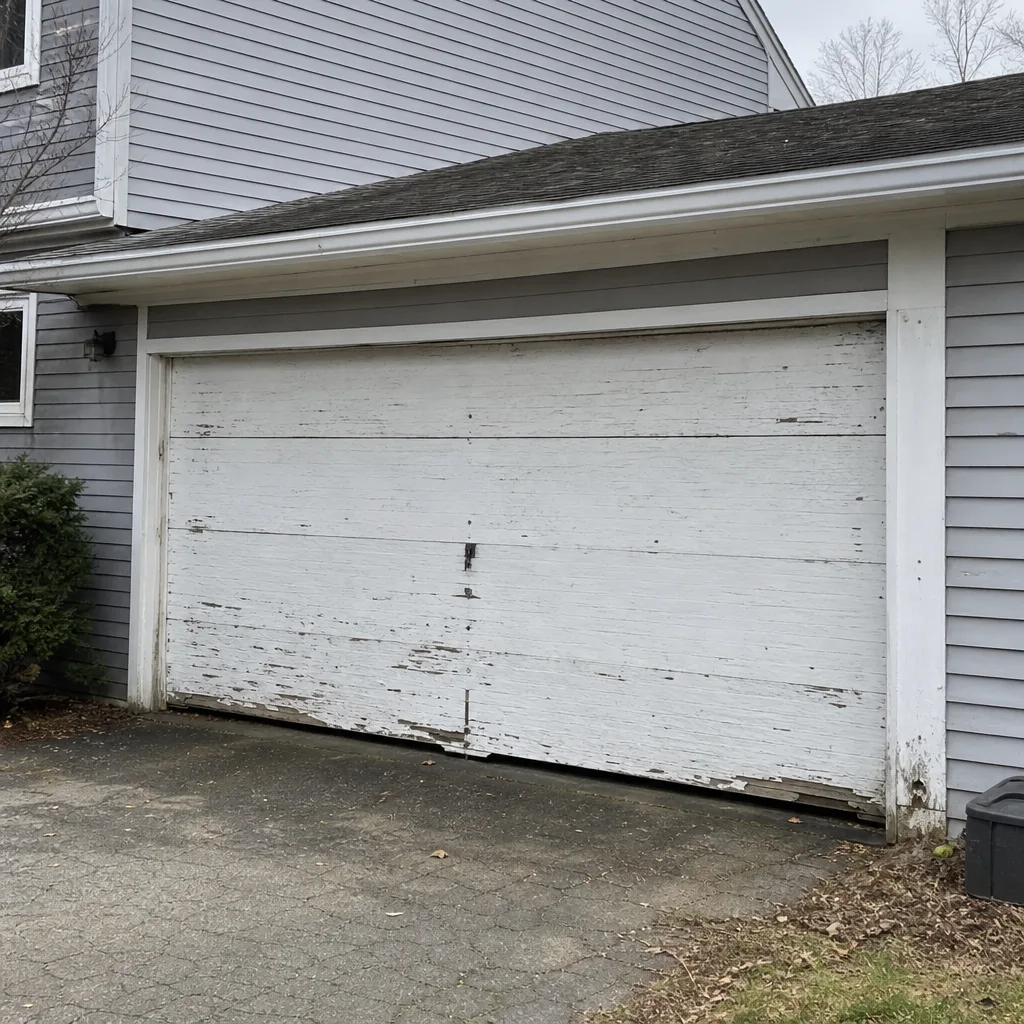 Before
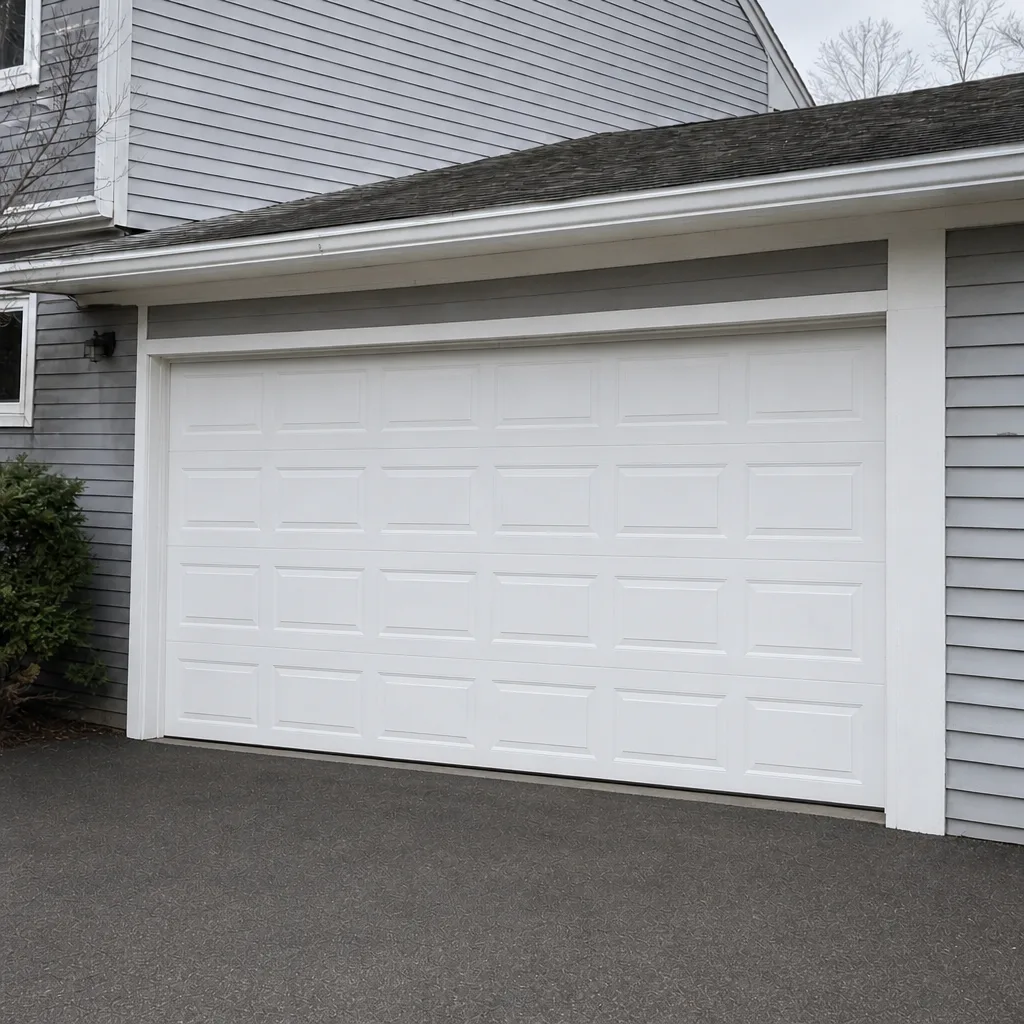 After
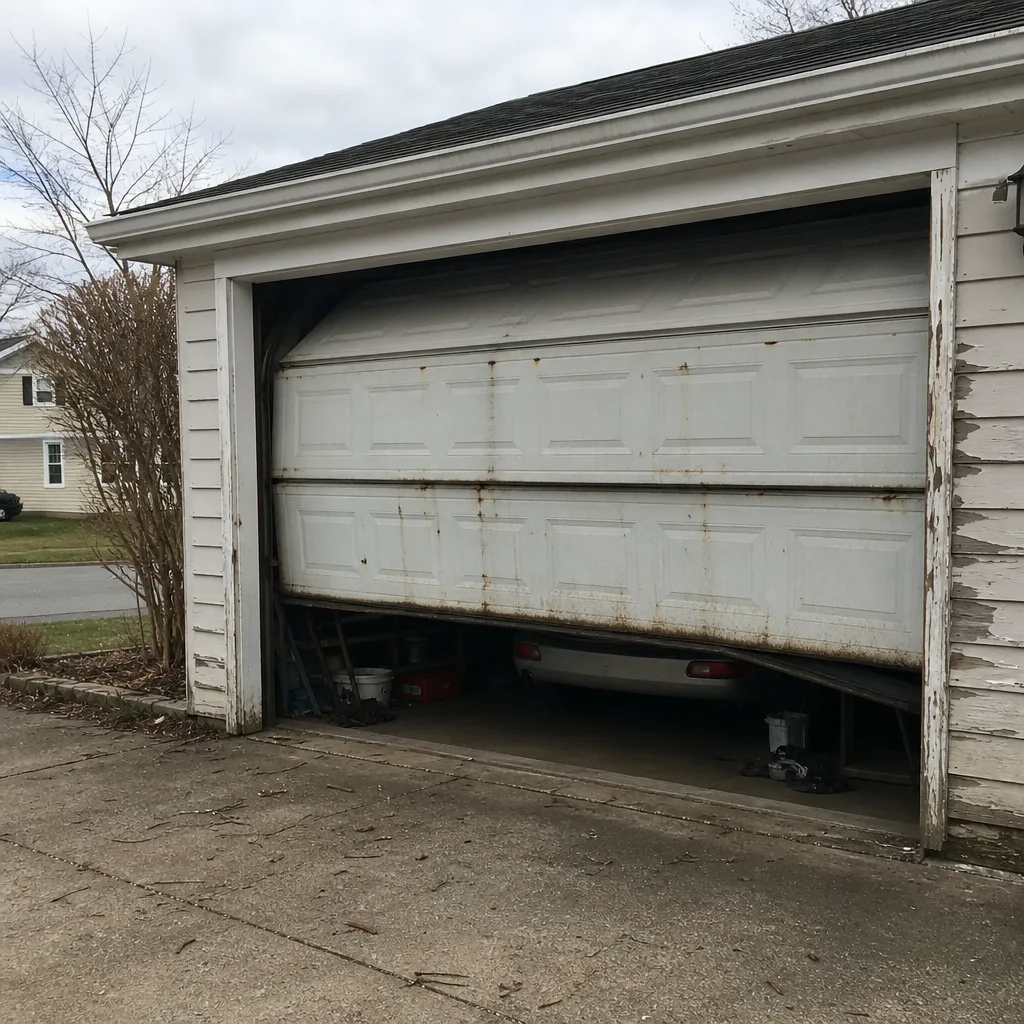 Before
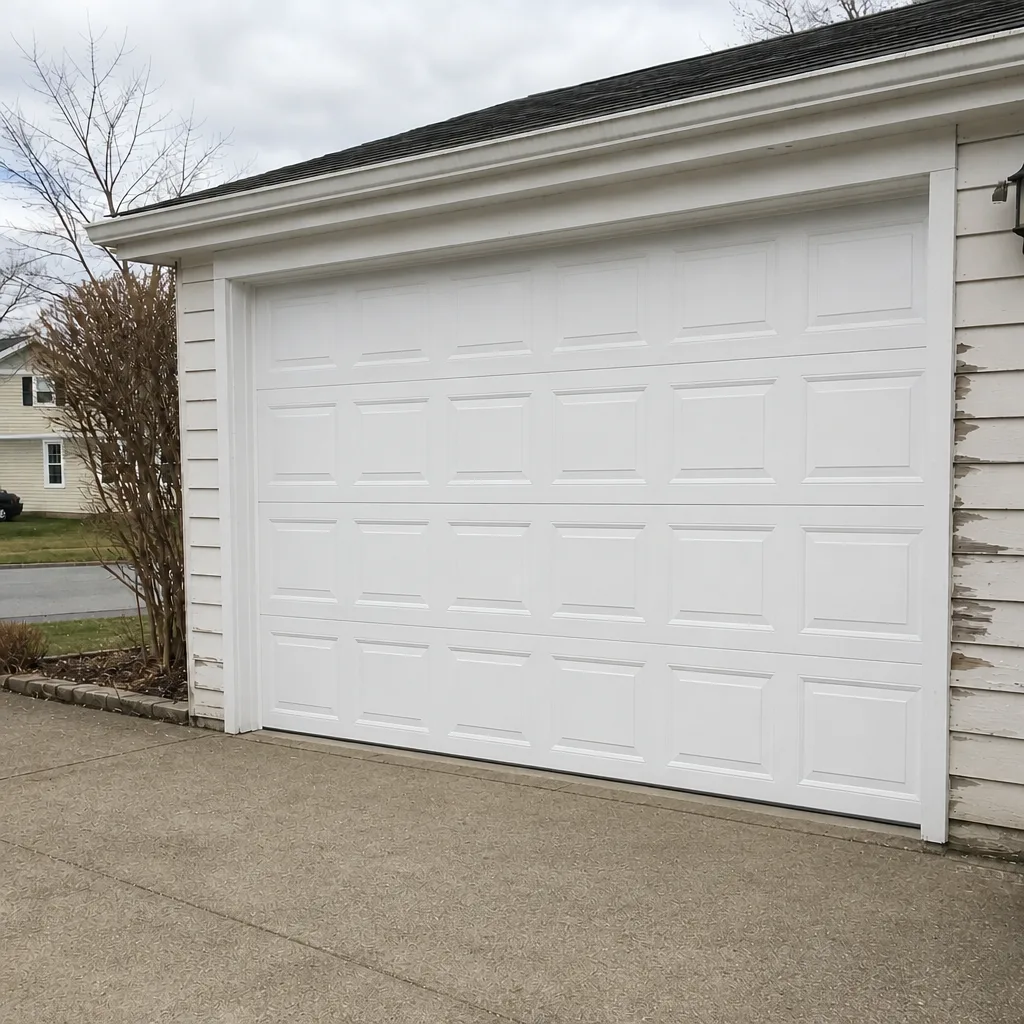 After
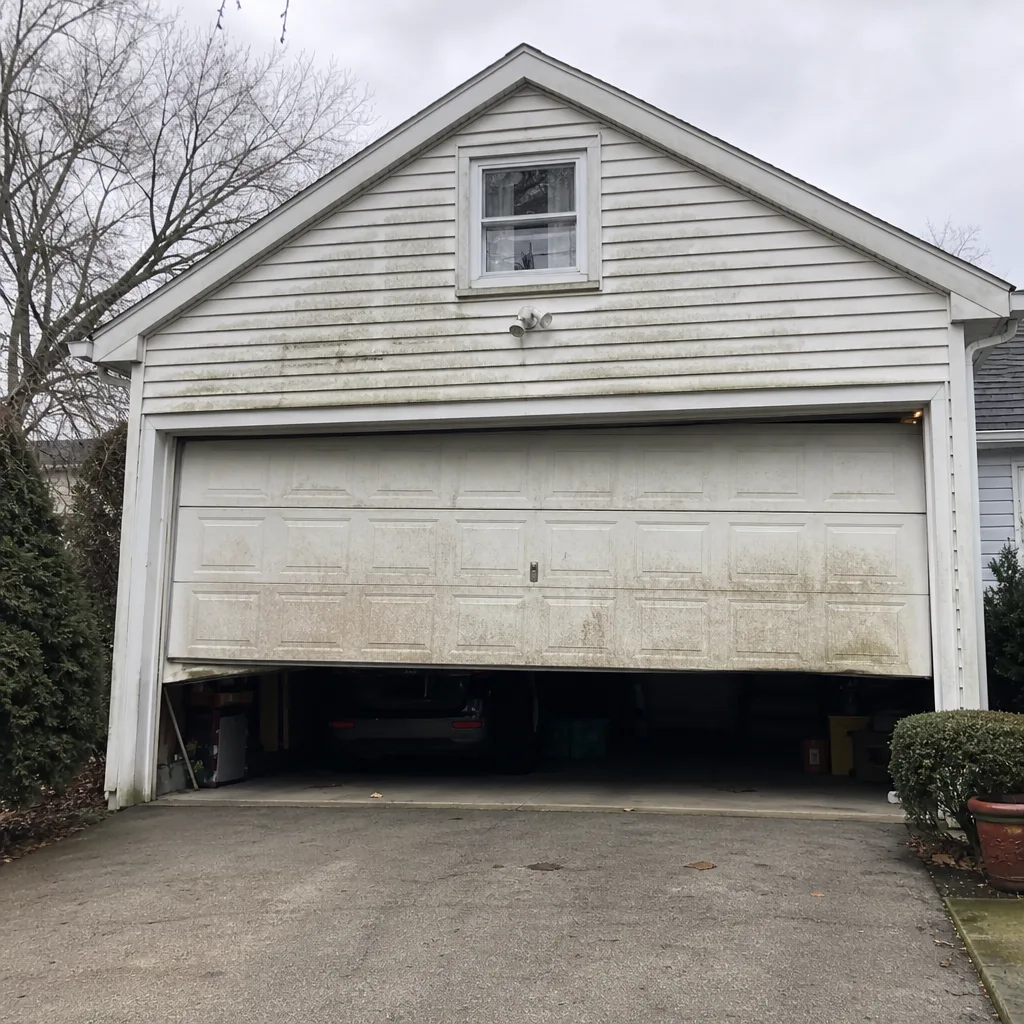 Before
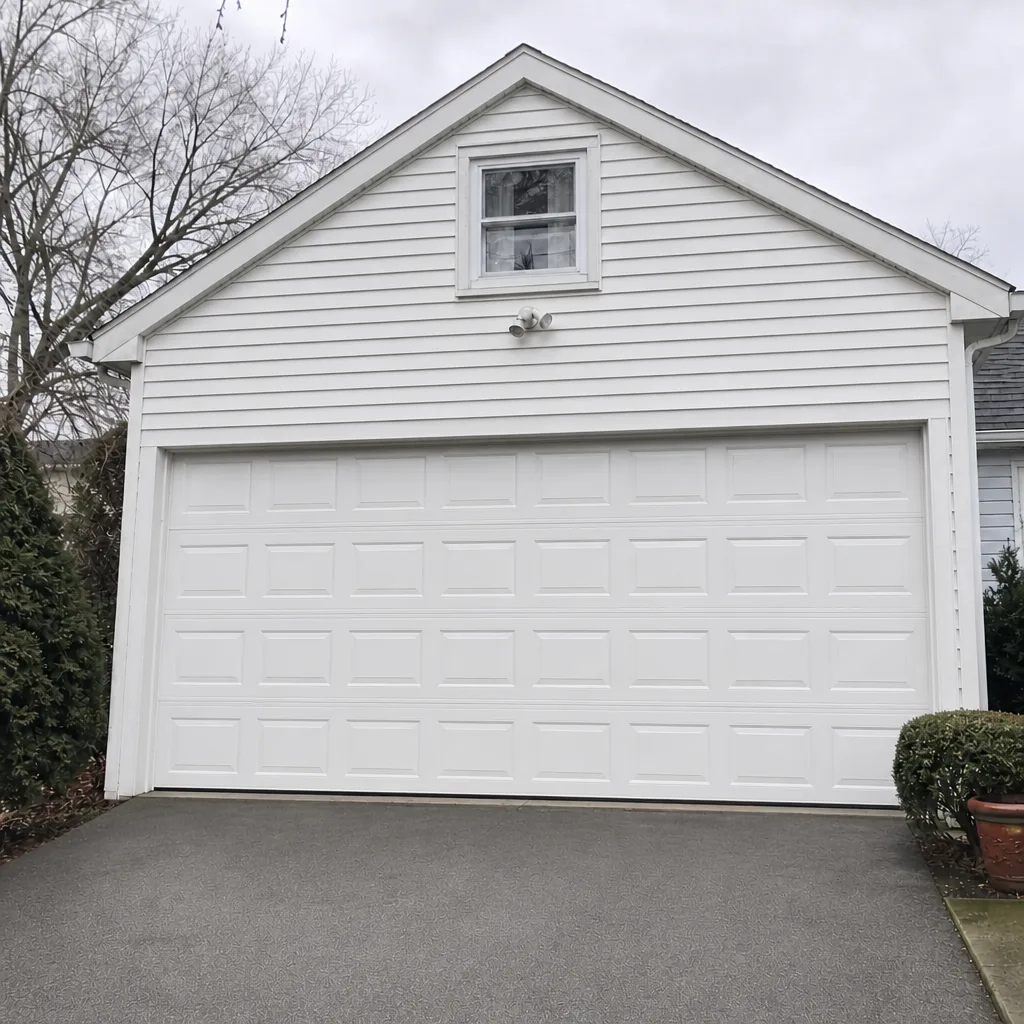 After
When to Call a Professional
Some garage door work is genuinely dangerous to attempt yourself, and the springs are the top of that list. Torsion and extension springs are under extreme tension, and a spring that’s wound, released, or adjusted without the right tools and training can cause serious injury. That’s not a warning we include for effect; it’s the reason spring replacement is a specialist job by necessity, not because of the difficulty of the task itself. We’d rather you call than try.
Beyond springs, call a professional if your door is off its track, if the opener runs but the door doesn’t move, if the door reverses or won’t close fully, or if you’re hearing grinding, popping, or squealing. These symptoms point to failures that a trained technician can diagnose fast and that often get worse, and more expensive, when left alone. And if the door is a brand you’re trying to evaluate before a purchase, a local technician’s opinion on parts availability is worth more than any comparison chart. Framingham Garage Door Repair Pros offers free estimates in Framingham, call (877) 665-1930, and our team works on the brands most homes here actually have.
Frequently Asked Questions
The best brand for a Framingham home is the one whose parts a local technician can source quickly, which usually means a mid-tier Clopay, Amarr, or Wayne Dalton door paired with a LiftMaster or Genie opener. Premium brands cost more for finish and design than for durability, and their proprietary parts can slow a repair. Ask any technician what parts lead times look like for a given brand before you buy. Call (877) 665-1930 for a free estimate.
No, a higher R-value only measures insulation; it doesn’t measure durability, seal quality, or hardware life. A well-insulated door with a poor weatherseal will still let in water and rust at the hardware, especially through Framingham’s freeze-thaw cycles. Compare R-value alongside steel gauge, seal material, and hardware finish. A local technician can help you weigh all four. Call (877) 665-1930 for a free estimate.
A lifetime warranty typically covers only the steel panel against rust-through, with springs, hardware, and labor carrying much shorter terms or none at all. Many are pro-rated, meaning the payout drops as the door ages, and rust-through exclusions often exclude the surface rust most New England doors show first. Read the full warranty document and compare labor coverage side by side. Call (877) 665-1930 for a free estimate.
Yes. Our technicians work on LiftMaster, Chamberlain, Genie, Clopay, Amarr, Wayne Dalton, Craftsman, and Raynor, covering the doors and openers most Framingham homes have. That breadth means no brand mismatch and no second company to call for one part of the system. Call (877) 665-1930 for a free estimate.
Find the printed spec sheet, not the marketing page, and look under “construction” or “materials” for the gauge number; it should be a two-digit figure like 24, 25, or 27. If it’s not listed, call the manufacturer and ask, and be wary of brands that describe their steel only as “heavy-duty.” A local specialist can tell you which gauge the warranty actually covers. Call (877) 665-1930 for a free estimate.
Because mid-range brands hit the intersection of the right steel gauge, the most widely available parts, insulation that fits the New England climate, and a price premium brands don’t justify for most homes. They also use standard spring, roller, hinge, and seal sizes, which keeps repairs fast. Premium lines are worth it for custom openings or specific architectural styles, but not as a default. Call (877) 665-1930 for a free estimate.
The Bottom Line
The brand on your garage door matters far less than whether its parts can reach your driveway quickly and whether it was built for New England winters. Steel gauge, weatherseal material, parts availability, and the real terms of the warranty are what determine how well a door serves a Framingham home. For most installations here, a mid-tier Clopay, Amarr, or Wayne Dalton door paired with a LiftMaster, Chamberlain, or Genie opener is the smart choice, balancing cost, durability, and fast repairs. Premium brands win on finish and design, not on longevity. Run the five-step evaluation before you buy anything, and always read the warranty document rather than the summary. The right brand is the one your local technician can actually service.
If you’re choosing a new door, replacing a failing one, or need spring, track, or opener work on a brand you already own, Framingham Garage Door Repair Pros is a garage-door-only specialist covering repair, opener repair, spring replacement, installation, and emergency service. Our technicians have up to 12 years of experience, we’re fluent in the eight brands above, and estimates are free. Call (877) 665-1930 for a free estimate, and we’ll help you sort the brand question in your own driveway.
Written by the team at Framingham Garage Door Repair Pros.